Flexibility isn’t a luxury—it’s essential for everyday movement, athletic performance, and preventing chronic pain. Most people rely on self-directed stretching, holding static stretches for 30 seconds, only to see tightness return. Real flexibility gains require professional guidance and the right methodology.
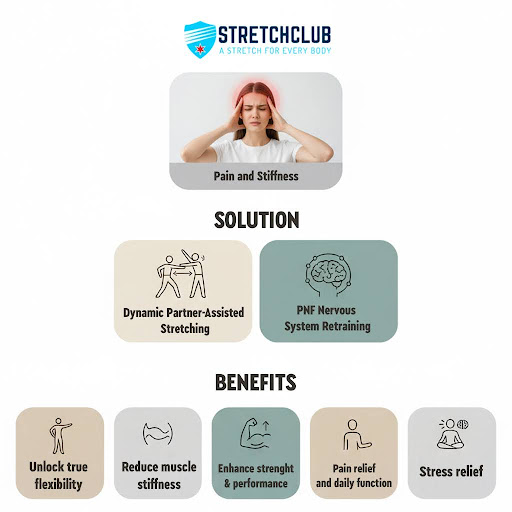
At StretchClub® in Oswego, we use dynamic partner-assisted stretching and PNF techniques to unlock genuine flexibility, improve movement quality, and enhance performance. By addressing both muscle tightness and underlying nervous system restrictions, we create lasting results that truly improve how your body moves.
Why Self-Directed Stretching Fails
Most people approach stretching the same way: find a tight muscle, hold a stretch for 30 seconds, move on. This static stretching approach provides minimal long-term benefit because it doesn’t engage your nervous system or create lasting change. Your muscle might feel slightly longer while you’re stretching, but within hours your nervous system returns to its previous protective pattern, and your tightness returns.
Static stretching can create an unexpected problem: it reduces your nervous system’s ability to activate muscles. Research shows prolonged static stretching depresses spinal reflexes and temporarily lowers neural drive, making muscles weaker. This is why many athletes feel sluggish after traditional stretching—you’re not just stretching muscles, you’re suppressing their activation.
The Nervous System Component of Flexibility
Your muscles feel tight because your nervous system is protecting them. Protective muscle tension is a nervous system strategy, not purely a muscular problem. Your nervous system learned to maintain tension around an area because it perceived threat—from injury, poor movement patterns, or stress. Simply stretching the muscle doesn’t reprogram this nervous system response. You’re fighting against your own protective system.
Professional stretching addresses both the muscular and nervous system components of tightness. Through guided movement, real-time feedback, and proper technique, we help your nervous system recognize that the area is safe. Protective guarding releases, and genuine flexibility improvements follow.
Dynamic Stretching: The Superior Approach
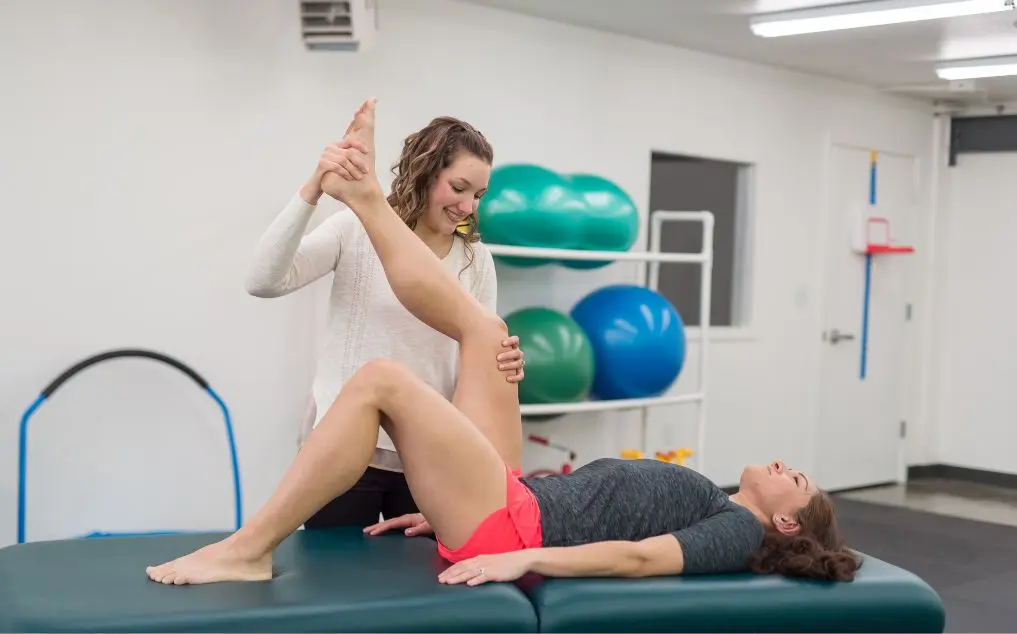
Dynamic partner-assisted stretching works fundamentally differently than static stretching. Instead of passively holding a stretch, dynamic stretching involves rhythmic, controlled movement through your range of motion under professional guidance. This approach engages your nervous system actively rather than suppressing it.
With professional guidance, dynamic stretching creates real change in your nervous system. Muscles lengthen under active control, while proprioceptors and mechanoreceptors signal that full range of motion is safe. Protective tension gradually releases, and flexibility gains become rapid and lasting because they’re based on nervous system retraining—not just passive stretching.
Why Dynamic Stretching Preserves Strength
Research shows that dynamic stretching reduces protective spinal reflexes without dampening your nervous system’s ability to activate muscles. You become more flexible without becoming temporarily weaker. In fact, many people report improved strength and power after dynamic stretching sessions because their nervous system is able to activate muscles more freely.This distinction is critical for athletes and active people. Static stretching before performance can actually impair your strength and power. Dynamic stretching before activity improves your flexibility while maintaining or enhancing your performance capability.
PNF Techniques: Retraining Your Movement System
Proprioceptive neuromuscular facilitation (PNF) is a specialized stretching and strengthening technique that goes beyond simple flexibility work. PNF uses specific movement patterns and precise timing to stimulate proprioceptors—sensory receptors that control your movement and muscle coordination. By stimulating these receptors, PNF essentially retrains how your nervous system controls your muscles and coordinates your movements.
When applied to flexibility, PNF creates rapid, dramatic flexibility improvements. Many people experience 10-20% range-of-motion gains in a single session because PNF is addressing the nervous system’s protective patterns, not just stretching tissue. Over multiple sessions, these improvements compound into substantial, lasting flexibility gains.
PNF Reduces Muscle Stiffness: The Evidence
Shear Modulus and Actual Muscle Tissue Change
Professional stretching isn’t just about feeling more flexible—it’s about actually changing your muscle tissue. A randomized cross-over study comparing static stretching and PNF on the hamstrings found that while both increased range of motion, only PNF stretching caused a significant decrease in shear modulus of the biceps femoris—meaning PNF actually reduced muscle stiffness at the tissue level, measured through elastography.
Another study examined the plantar flexor muscles using shear-wave elastography and compared PNF stretching with PNF followed by post-stretching activation. The PNF plus post-stretching activation group showed approximately 6% decrease in mean shear modulus while preserving strength—demonstrating that PNF doesn’t just improve flexibility, it reduces actual tissue stiffness while maintaining your power and performance.
Gender-Consistent and Long-Term Stiffness Reduction
Research including both men and women performing PNF stretching showed that stiffness of the biceps femoris and semitendinosus decreased significantly across both genders, indicating that PNF’s tissue-level benefits are consistent and reliable. A comparative study of static, ballistic, and PNF stretching found that PNF produced one of the largest decreases in muscle stiffness and muscle-tendon stiffness—outperforming even ballistic (bouncing) stretching in terms of actual tissue change.
This research demonstrates something critical: PNF doesn’t just stretch your muscles. It actually changes your muscle tissue at a structural level, reducing stiffness in ways that static stretching cannot. This is why PNF produces lasting flexibility improvements and why athletes report genuine performance changes, not just temporary flexibility gains.
Unlock Your True Flexibility: Professional Guidance for Every Goal
Professional Assessment: Targeted Flexibility
Flexibility isn’t one-size-fits-all. Restrictions vary by individual, from tight hips to limited thoracic rotation. Professional assessment identifies your exact limitations and the root cause—tight muscles, poor motor control, movement dysfunction, or nervous system guarding—so stretching can be precise and effective.
Athletic Performance
Athletes often underestimate how flexibility impacts performance. Restrictions in key areas—like thoracic rotation, hips, or shoulders—limit power, speed, and efficiency. Professional stretching addresses these limitations, unlocking the full range of motion and enhancing skill execution, strength, and overall athletic capability.
Daily Function and Pain Prevention
Flexibility affects everyday life, too. Tight hip flexors, chest muscles, or quadriceps can create chronic back, neck, or knee pain. Professional stretching improves mobility, corrects compensations, and resolves pain by addressing root causes rather than just managing symptoms.
Stress Relief and Nervous System Recovery
Stretching isn’t just physical—it’s therapeutic for your nervous system. Dynamic partner-assisted stretching and PNF release muscle tension, reset protective patterns, and transition your body from “fight or flight” to “rest and recover,” leaving you calmer, more relaxed, and mentally clear.
Stretching Integration with Strength and Performance
Flexibility work shouldn’t exist in isolation from strength and performance training. The most effective programs integrate stretching with strengthening and movement training. Professional stretching at StretchClub Oswego fits into comprehensive programs that address all aspects of your movement system—flexibility, strength, stability, and performance.
We assess your complete movement profile and design integrated programs that optimize your entire system. The result is not just flexibility, but genuine movement improvement that translates to better performance, better function, and better resilience.
Your Flexibility and Performance Journey
Unlocking true flexibility takes more than self-directed stretching—it requires professional guidance, proper methodology, and nervous system retraining. At StretchClub® in Oswego, we help you move from restriction to genuine flexibility and improved performance.
Start with a free consultation to assess your flexibility, identify restrictions, and create a personalized program tailored to your goals—whether for athletic performance, pain relief, or functional improvement. Book your free stretch online, call (630) 636-6180, or email info@stretchclub.com to begin your journey today.
FAQs
How is professional stretching different from stretching I can do at home?
Self-directed stretching is passive and often reinforces protective nervous system patterns. Professional dynamic stretching engages your nervous system actively, retrains protective responses, and creates lasting flexibility improvements. Professional guidance also ensures you’re stretching the right muscles with proper technique—many people stretch ineffectively or even worsen their restrictions with incorrect technique.
Will professional stretching make me weaker, or does it improve my strength?
Dynamic stretching actually improves your strength and power by allowing your nervous system to activate muscles more efficiently. Unlike static stretching, which temporarily weakens you, dynamic professional stretching maintains or enhances your strength while improving flexibility. This is why professional stretching is ideal for athletes.
How quickly can I expect flexibility improvements from professional stretching?
Many people notice flexibility improvements within 1-2 sessions as nervous system protectiveness releases. More substantial flexibility gains typically develop over 4-8 weeks of consistent professional stretching. The speed of improvement depends on how long you’ve had your restrictions and how consistently you engage with your program.
Can professional stretching resolve chronic pain caused by tightness?
Often, yes. Many chronic pain conditions stem from flexibility restrictions, creating movement compensation. By systematically addressing your specific tightness, professional stretching frequently resolves pain that’s persisted for months or years. Even old restrictions can be improved through proper stretching methodology.
Will my flexibility improvements last, or will I get tight again?
Once your nervous system retrains to allow a fuller range of motion, flexibility improvements typically persist. Some people benefit from occasional maintenance stretching, but many maintain substantial flexibility improvements long-term. Prevention through regular movement practice helps maintain your results.
Is professional stretching appropriate if I have existing pain or injury?
Yes. Professional stretching is actually particularly valuable after injury because it addresses the protective tension that injury creates. We adjust intensity based on your pain level and healing stage. In fact, proper stretching is essential for injury recovery, not something to avoid.
Can professional stretching improve my athletic performance, or is it just for flexibility?
Improved flexibility directly improves athletic performance by allowing a greater range of motion, better power transfer, and more efficient movement mechanics. Many athletes experience improved speed, power, and skill execution after unlocking their flexibility restrictions. Performance improvement is often the most valuable outcome of professional stretching.