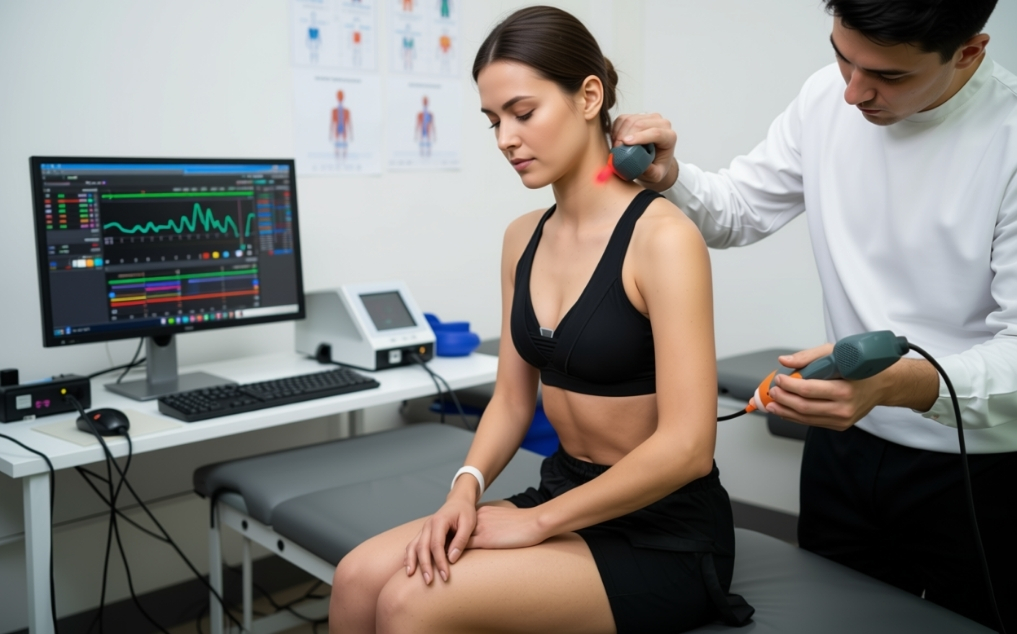
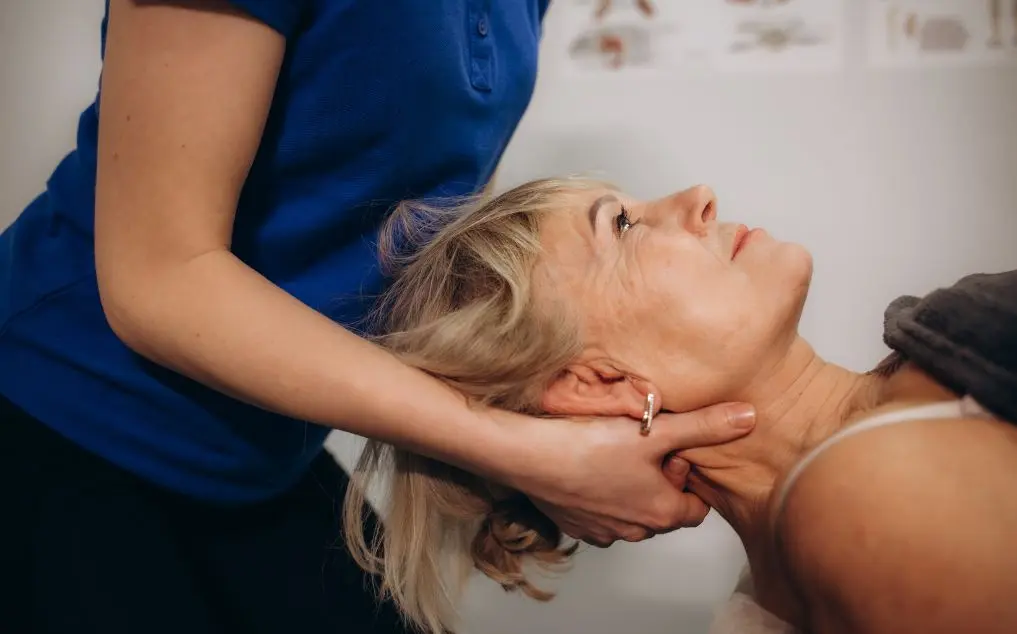
Neck stiffness often starts subtly, then gradually worsens, making simple movements—turning, tilting, or looking up—restricted or painful. Many respond by resting or taking medication, which can actually worsen stiffness by reinforcing restriction and deconditioning.
Safe, effective treatment requires addressing the root cause while respecting your body’s healing. Dr. Adam Macek and his team at StretchClub® in Naperville use dynamic partner-assisted stretching and PNF techniques to release stiffness, restore mobility, and retrain your nervous system to maintain it—providing safe, lasting relief.
Understanding Neck Stiffness: Why It Develops
Neck stiffness develops when your cervical spine loses its natural mobility. Common causes include poor posture from desk work, phone use, or driving; stress and emotional tension that trigger protective muscle guarding; inactivity that deconditions cervical muscles; and injury or trauma that creates persistent stiffness.
Neck stiffness is self-perpetuating. As movement decreases, muscles tighten further, and the nervous system adapts to the restricted range as “normal.” Over time, stiffness becomes your baseline, and your nervous system forgets how to move freely.
Why Rest Makes Stiffness Worse
Conventional advice suggests resting your neck when it’s stiff or painful. While brief rest helps manage acute inflammation, prolonged rest actually worsens stiffness. Your cervical muscles weaken from disuse. Your joints become stiffer from lack of movement. Your nervous system reinforces restricted movement patterns. When you finally try to move your neck again, it’s even stiffer than before.
Effective neck stiffness treatment requires safe, progressive movement—not immobilization. The challenge is knowing which movements are safe and how to progress appropriately.
The Safe Approach to Stiffness Release
Safe neck treatment starts with a thorough assessment of your mobility, pain, posture, and movement patterns to guide a safe progression. We then use dynamic partner-assisted stretching to carefully release stiffness, gradually expanding your range of motion. This trains your nervous system that increased mobility is safe, promoting sustainable improvement.
Dynamic Stretching: Progressive Stiffness Release
Safe neck stiffness treatment relies on progressive challenges. We work at the edge of your comfortable range, gently expanding it over multiple sessions. Dynamic partner-assisted stretching gradually teaches your nervous system that increased motion is safe, while muscles lengthen and joints regain mobility. By the end of treatment, your neck moves through ranges you may have forgotten.
The Gradual Progression Principle
Improvement comes from respecting your current limits while steadily challenging them. Full mobility isn’t forced in one session; sustainable change happens as tissues adapt naturally. Many notice meaningful stiffness reduction within 2–3 weeks, with dramatic mobility gains typical after 6–8 weeks of consistent treatment.
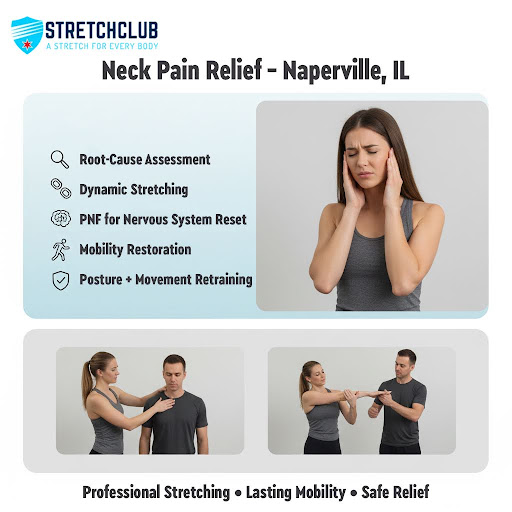
PNF for Nervous System Adaptation
Your stiffness isn’t just a muscular problem—your nervous system has adapted to your restricted range of motion. PNF techniques address this neurological adaptation by stimulating proprioceptors through specific movement patterns. When applied to stiff necks, PNF helps your nervous system recognize and accept expanded ranges of motion.
This nervous system adaptation is critical. Without it, your nervous system will revert to protective stiffness even if your muscles are stretched. With PNF-based retraining, your nervous system learns that full mobility is safe and normal, maintaining improvements long-term.
Postural Correction for Long-Term Stiffness Prevention
Your daily posture directly influences your neck stiffness. Forward head posture maintains chronic tension in posterior neck muscles. Rounded shoulders create muscle imbalances affecting your cervical spine. Poor sleeping position reinforces stiffness overnight. Professional treatment includes identifying these postural contributors and teaching you better alternatives.
By correcting your postural habits, you eliminate the daily factors maintaining your stiffness. Combined with professional stretching and nervous system retraining, postural correction creates lasting improvement rather than temporary relief followed by stiffness return.
Stiffness from Desk Work and Screen Time
Modern work creates modern stiffness patterns. Prolonged desk work with a forward-leaning posture tightens anterior chest muscles and creates forward head posture. Extended screen time maintains this same restrictive position. Your neck adapts to this restricted position as your baseline. Over months or years, you develop significant stiffness you don’t even notice until you try to look up, look behind you, or turn your head fully.
Professional treatment systematically reverses these work-induced patterns. We release the tightness your work creates, retrain your postural habits, and help you maintain better positioning during your workday. Many people report that their stiffness dramatically improves simply by correcting their desk setup and posture awareness.
Stiffness from Old Injuries or Accidents
If your neck stiffness began after an injury or accident, it often involves prolonged protective muscle guarding. Your nervous system protected your neck by restricting movement, which was appropriate initially. However, this protection often persists long after healing is complete, leaving you with chronic stiffness and restricted mobility.
Safe, progressive treatment specifically addresses post-injury stiffness by gradually retraining your nervous system that movement is safe. We progress carefully, respecting your healing and any ongoing concerns, while systematically working toward restored mobility and function.
Stiffness and Headache Connection
Neck stiffness frequently underlies tension headaches. Tight posterior neck muscles create tension that radiates into your head. Restricted cervical mobility forces compensation through your head and jaw, creating additional tension. Many people with chronic tension headaches discover that treating their underlying neck stiffness resolves their headaches.
Professional neck treatment that releases stiffness and restores mobility often eliminates headaches that patients thought were a separate problem. By addressing the underlying stiffness, you address the root cause of the headaches.
Strengthening for Sustained Mobility
As your stiffness decreases and your mobility improves, your treatment progresses to systematic strengthening. Your deep cervical stabilizers need to be developed so they can support your expanded range of motion. Without strengthening, you might regain mobility but lack the muscular support to maintain it.
Our progressive strengthening focuses on functional capability rather than just muscle size. You develop strength that supports your actual movement needs, allowing you to maintain your improved mobility long-term.
Why Direct Cervical Work Matters: The Research
While general stretching and flexibility work can help, direct, targeted treatment of your neck muscles produces superior results. Research comparing PNF stretching of remote muscle groups versus direct cervical flexor training found that while remote stretching improves flexibility, direct cervical flexor endurance training produces the most meaningful functional improvements in neck muscle endurance and control. This research highlights a critical principle: generic flexibility work alone isn’t enough for meaningful, lasting neck stiffness relief.
Genuine, lasting improvement in neck stiffness requires targeted work on your cervical muscles combined with progressive strengthening. That’s why our approach combines dynamic stretching with specific exercises to build cervical stability and endurance. One-off stretching or remote exercises can’t produce these functional changes—progressive, hands-on treatment is what creates lasting results.
Your Safe, Progressive Path to Mobility
Neck stiffness that develops over months or years requires more than a quick fix. It demands safe, progressive treatment that respects your current limits while systematically restoring mobility. At StretchClub in Naperville, we guide you from chronic stiffness to genuine freedom of movement.
Begin with a free consultation, where we’ll assess your mobility, pinpoint stiffness patterns, evaluate posture and movement habits, and explain how targeted, progressive treatment can restore your neck’s natural function. We’ll review your history, discuss your goals, and create a personalized plan tailored to your needs. Schedule your free session today by calling (630) 922-6500 or emailing info@stretchclub.com to start your journey to lasting relief.
FAQs
Is forcing my stiff neck through full range of motion the fastest way to improve, or could it cause harm?
Forcing stiff necks through aggressive ranges can cause harm and often makes stiffness worse. Safe, progressive treatment that respects your current limitations while gradually expanding range is both safer and more effective. Your nervous system needs to adapt to expanded ranges, not be forced beyond its comfort. Progressive treatment produces better long-term results.
Why has my neck stiffness persisted for so long if I’ve been stretching at home?
Home stretching often doesn’t create nervous system adaptation—it just temporarily stretches muscles. Your nervous system reverts to its learned restricted patterns afterward. Professional treatment actively retrains your nervous system to accept and maintain expanded ranges. Additionally, many people stretch incorrectly or stretch the wrong muscles, sometimes making stiffness worse.
Can neck stiffness from years of poor posture actually be reversed?
Yes. Even long-standing postural stiffness responds well to safe, progressive treatment. Your nervous system can relearn healthy movement patterns, and your muscles can adapt to better positioning. Combined with postural correction and ergonomic improvements, lasting stiffness relief is achievable even after years of poor habits.
Will my stiffness return after treatment ends, or is improvement permanent?
Once your mobility is restored through safe, progressive treatment, your nervous system has relearned expanded ranges as normal. Many people maintain improvements long-term through postural awareness and occasional movement practice. Some benefit from periodic maintenance sessions. Prevention through good posture and regular movement helps maintain your results.
Is neck treatment appropriate if I have arthritis or degenerative changes, or would treatment make things worse?
Professional neck treatment can be very beneficial even with arthritis or degenerative changes. We adjust treatment appropriately for your condition. In fact, gentle, progressive movement often improves arthritic joints better than immobilization. Treatment is personalized based on your specific condition and imaging if available.
How does neck stiffness from screen time and desk work differ from other stiffness, or is treatment the same?
Screen time stiffness has specific postural components—forward head posture and rounded shoulders—that require specific correction. Treatment addresses both the stiffness release and the postural retraining necessary to prevent recurrence. Without addressing the postural components, screen time stiffness will return once treatment ends.
Can professional neck treatment help both my stiffness and my tension headaches?
Often, yes. Neck stiffness frequently underlies tension headaches. By releasing your neck stiffness and restoring mobility, we often resolve headaches that patients thought were a separate problem. Addressing the root cause of both is more effective than treating them separately.
What’s the difference between quick adjustments or manipulations versus progressive neck treatment?
Quick adjustments provide temporary relief. Progressive treatment creates lasting adaptation by retraining your nervous system and muscles. While adjustments feel good immediately, they don’t address why your stiffness developed. Progressive treatment takes longer but produces sustainable improvements that persist without ongoing adjustments.