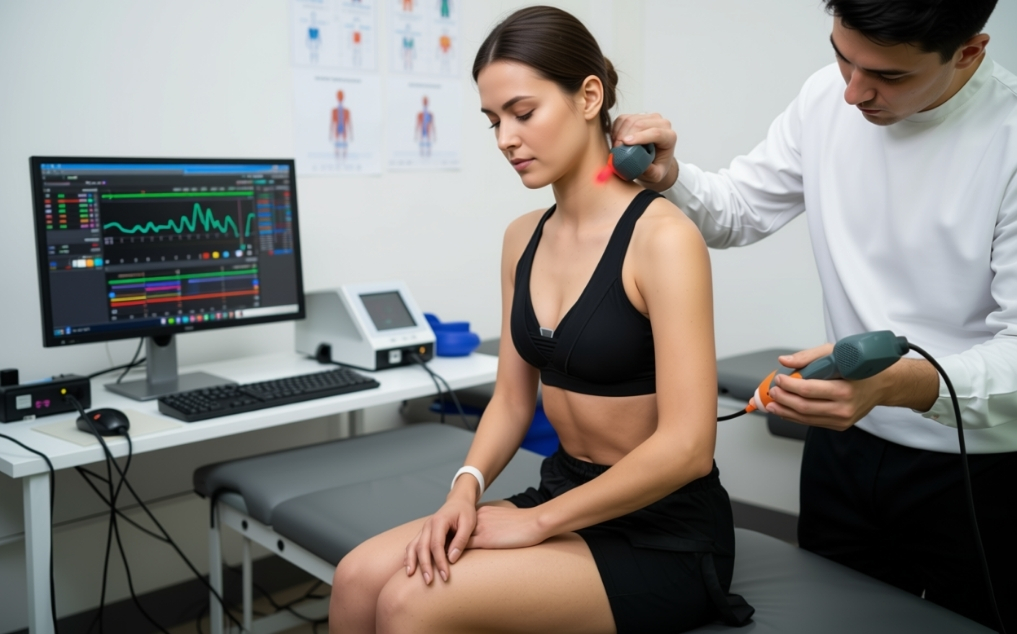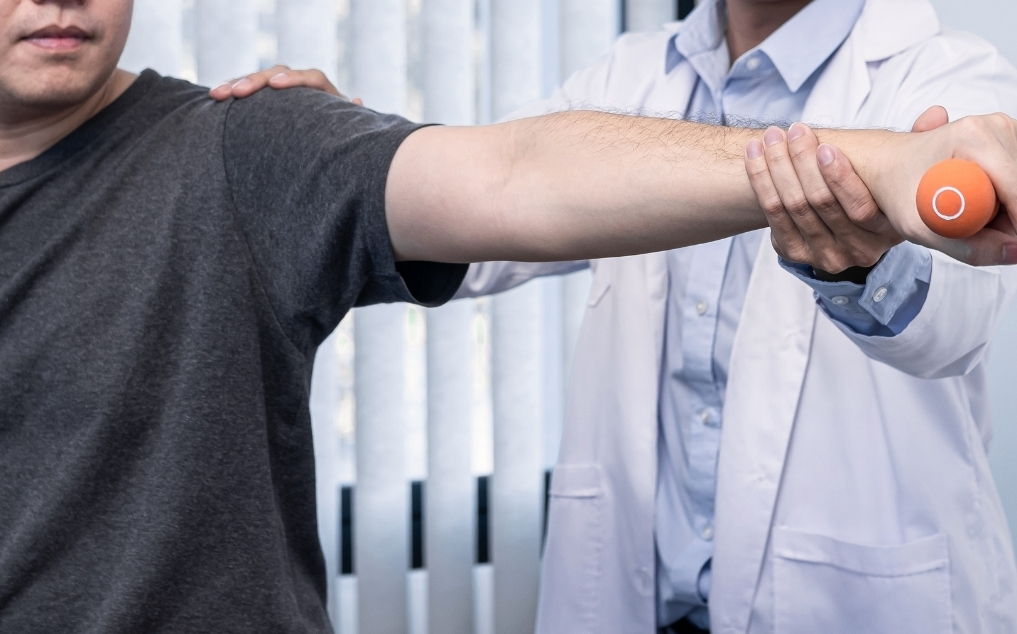
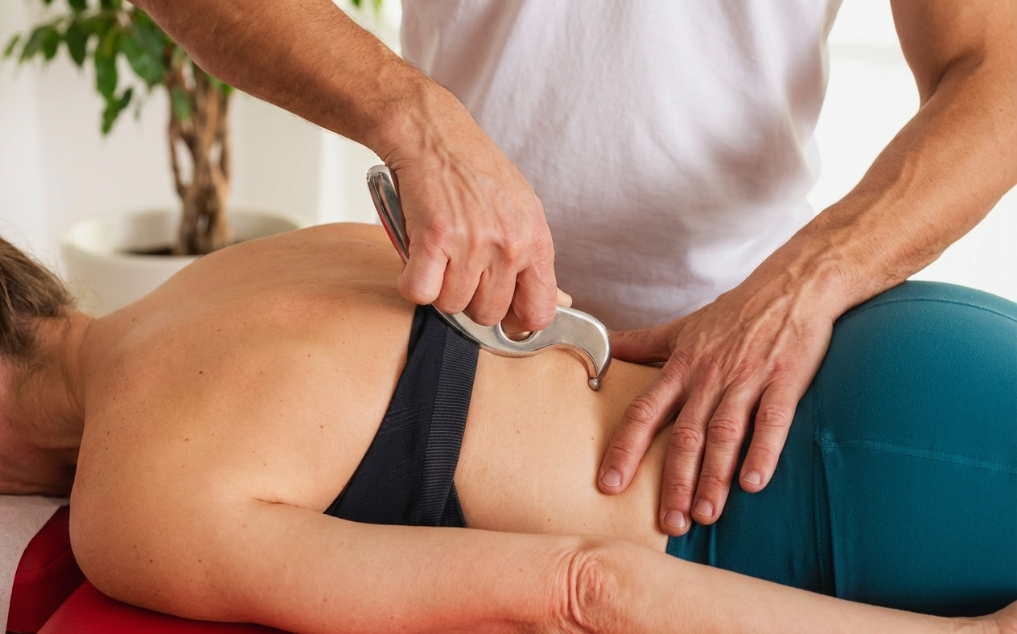
If stretching hasn’t relieved your ongoing muscle tightness or restricted movement, fascial adhesions may be the cause. At StretchClub, our doctor-designed myofascial release programs help Aurora-area clients restore mobility and lasting relief, with locations in Naperville, Yorkville, and Oswego.
We accept most commercial health insurance including Blue Cross Blue Shield PPO, making professional myofascial care accessible to more Aurora-area residents. Our one-on-one approach means you’ll never be just another number in a crowded clinic – you’ll receive focused, expert attention tailored specifically to your body’s needs.
Why Muscle Tightness Becomes a Chronic Problem
Most people assume muscle tightness is just muscle, but fascia – the connective tissue around every muscle, organ, and bone – plays a key role in movement. According to the Cleveland Clinic, restricted fascia from injury, repetitive motion, or stress can form adhesions that limit mobility and cause persistent tension.
The problem compounds over time because restricted fascia creates compensation patterns. Your body adapts by recruiting different muscles to accomplish the same tasks, which leads to even more tightness and restriction in new areas. Before long, what started as tension in your neck has spread to your shoulders, upper back, and even down into your hips.
The Aurora Lifestyle Factor
For Aurora residents balancing work, family, and long commutes, muscle tightness often builds over time. Whether sitting at a desk, standing all day, or doing physically demanding jobs, repetitive stress affects your fascia. Our team tailors treatment plans to your lifestyle, addressing the specific restriction patterns your daily activities create.
Many clients come to us after trying everything else – foam rolling, stretching on their own, even multiple massage sessions that provided only temporary relief. The difference at StretchClub lies in our comprehensive understanding of how fascial restrictions develop and what it truly takes to release them permanently.
The Science Behind Sustained Pressure and Fascial Release
True myofascial therapy is defined by its focus on the fascia and the sustained pressure applied to it. Unlike traditional massage, which typically uses kneading, stroking, or rhythmic pressure to relax muscles and improve circulation, our myofascial release techniques use slow, sustained pressure held for extended periods to target the fascia specifically. This sustained engagement allows the connective tissue to stretch, soften, and reorganize rather than just superficially relieve muscle tension.
Biomechanically, myofascial therapy aims to disrupt adhesions and restrictions in the fascial layers that limit motion and contribute to chronic tightness. Research describes it as involving low-load, long-duration pressure applied directly or indirectly to fascial tissues, which promotes increased flexibility, reduced stiffness, and improved range of motion.
How Fascia’s Unique Properties Respond to Treatment
Our approach acknowledges fascia’s viscoelastic properties, which respond best to slow, constant loading rather than rapid movement. Our doctors and athletic trainers maintain pressure over restriction sites for extended periods – rather than using continuous flowing strokes – so that fascial fibers can respond and gradually lengthen. This isn’t just about pressing harder; it’s about understanding the biomechanics of how connective tissue reorganizes under specific types of sustained load.
During your one-on-one sessions, our expert team members assess how restrictions in one area affect movement throughout your entire body. This full-body perspective sets us apart from practitioners who focus only on where it hurts. We might discover that your persistent shoulder tension stems from fascial restrictions in your ribs or that your hip tightness connects to limitations in your thoracic spine.
How Our Approach Creates Lasting Change Through Integrated Treatment
What makes our approach uniquely effective is how we blend myofascial release with PNF and dynamic partner-assisted stretching. After releasing fascial restrictions using sustained pressure techniques, we immediately work on retraining optimal movement patterns through assisted stretching. Your body needs to learn how to move properly once those restrictions are gone, otherwise old patterns creep back in and recreate the tightness you just eliminated.
Our emphasis on shorter, more frequent, one-on-one sessions allows us to progressively work through layers of restriction while your tissue adapts and reorganizes. This is far more effective than sporadic, lengthy appointments that overwhelm your nervous system and leave you sore for days. Think of it as guiding your body through a transformation rather than forcing sudden changes it can’t maintain.
Why Duration and Intent Define Effective Myofascial Work
These sustained techniques differ from typical massage in intent and application. While both can relieve discomfort, myofascial release is specifically designed to improve the biomechanics of the fascial system, addressing deeper structural restrictions that traditional massage – with its focus on muscles and superficial soft tissue – may not fully resolve. The extended duration of pressure application allows fascial tissues the time they need to release and reorganize at a structural level.
This explains why so many Aurora residents have tried massage, stretching, and foam rolling without achieving lasting results. Those approaches work on muscles but don’t adequately address fascial adhesions with the sustained, biomechanically-specific pressure required. Our doctor-designed programs create structural changes in your fascial system that allow muscles to finally relax and move the way they’re supposed to.
Conditions We Successfully Treat with Myofascial Release
Aurora-area residents come to our Naperville, Yorkville, and Oswego locations for help with a wide range of restriction patterns. Chronic lower back tightness is perhaps the most common complaint we address, often stemming from fascial restrictions in the thoracolumbar fascia, hip flexors, or piriformis muscles. By systematically releasing these restrictions using sustained pressure techniques and retraining proper movement patterns, we help clients eliminate pain that’s plagued them for years.
Neck and shoulder tension represents another area where our approach excels. The interconnected fascia throughout your upper body can create restriction patterns that trigger headaches, limit neck rotation, and make reaching overhead difficult. Our team addresses these patterns comprehensively rather than just working on the spots that hurt most.
Beyond Pain Relief: Optimizing Your Body’s Function
Athletes and active individuals throughout Aurora discover that myofascial release isn’t just about fixing problems – it’s about unlocking your body’s full potential. Restricted fascia limits power generation, compromises form, and slows recovery from training. Whether you’re training for a race, playing recreational sports, or simply want to keep up with your kids, releasing fascial restrictions can dramatically improve how your body performs.
We also specialize in treating injuries from auto accidents, helping Aurora-area residents recover from the complex soft tissue trauma these incidents cause. The combination of sustained myofascial release and dynamic stretching accelerates healing and prevents the chronic compensation patterns that can develop after accidents when soft tissue injuries aren’t properly addressed.
Start Your Journey to Unrestricted Movement
Muscle tightness and restriction don’t have to limit your life. The combination of expert myofascial release and doctor-designed stretching programs at StretchClub offers Aurora-area residents a proven path to lasting relief and improved function. Our team is ready to help you break free from chronic restrictions and discover what your body can accomplish when fascia moves freely and muscles work efficiently.
Take the first step today by booking your complimentary intro stretch at any of our three convenient locations. Call Naperville at (630) 922-6500, Yorkville at (630) 882-9695, or Oswego at (630) 636-6180, or schedule online through ZocDoc. Experience why Aurora-area residents trust StretchClub for professional myofascial care that delivers real, lasting results. Your journey to unrestricted movement starts with one decision – make today that day.
FAQs
How is myofascial release different from deep tissue massage?
While both involve pressure, myofascial release targets the connective tissue system rather than primarily working muscle tissue. We use sustained, low-load pressure held for extended periods to create structural changes in fascia, while massage uses varied pressure and movement techniques focused on circulation and muscle relaxation. This fundamental difference is why myofascial work produces lasting improvements in chronic restriction patterns that don’t respond well to massage alone.
Will I need ongoing treatment indefinitely?
Most clients experience significant improvement within several weeks of consistent treatment, then transition to maintenance visits as needed. The goal isn’t lifelong dependence but rather addressing your current restrictions and teaching your body new movement patterns it can maintain. Many clients eventually space out sessions or only return when new restrictions develop from increased activity or stress.
Can myofascial release help with restrictions from old injuries?
Absolutely. Fascial restrictions often persist long after the original injury healed because they were never properly addressed. Even injuries from years ago can create restriction patterns affecting your current function. We treat many Aurora residents who finally find relief from old sports injuries, auto accidents, or surgical scars through our comprehensive myofascial approach combined with movement retraining.
How does your approach differ from foam rolling at home?
Foam rolling provides general pressure but lacks the specificity, three-dimensional awareness, and sustained duration needed for deeper fascial release. Our trained team can identify exact restriction patterns, apply pressure from optimal angles, and combine release work with active movement in ways you simply cannot replicate on your own. Think of foam rolling as helpful maintenance between professional sessions rather than a replacement for hands-on expertise.
What should I expect to feel during and after treatment?
You’ll experience sensations of pressure and stretch during treatment, sometimes with tender areas that feel like “good discomfort.” Our team constantly communicates to ensure pressure is appropriate and effective. After sessions, most clients feel increased mobility and reduced tension immediately, though you might notice mild soreness as your body adapts. This differs from massage soreness – it’s more about tissues reorganizing than muscle fatigue.
Do you work in areas beyond where I feel tightness?
Yes, and this comprehensive approach is crucial for lasting results. Fascial restrictions in your hips might cause lower back tightness, or restrictions in your ribcage could create shoulder problems. Our doctors and athletic trainers assess your entire movement system to identify the true source of your restrictions rather than only addressing symptoms. This is why clients often experience improvements in areas they didn’t even mention in their initial assessment.