

After an accident, one of the most common questions patients ask is how long they’ll need chiropractic treatment to fully recover. You want relief from pain, but you also want to know when you can return to normal life without ongoing appointments. The answer isn’t one-size-fits-all—recovery timelines depend on injury severity, treatment consistency, and how quickly you began care after your accident.
At StretchClub, we create personalized treatment plans tailored to your injuries and recovery goals, combining advanced chiropractic therapy with assisted stretching. Our integrated approach provides more than temporary relief—it promotes complete healing and helps prevent chronic pain. Understanding typical recovery phases and factors affecting your timeline lets you set realistic expectations and stick to the treatment schedule for lasting results.
Understanding the Phases of Post-Accident Recovery
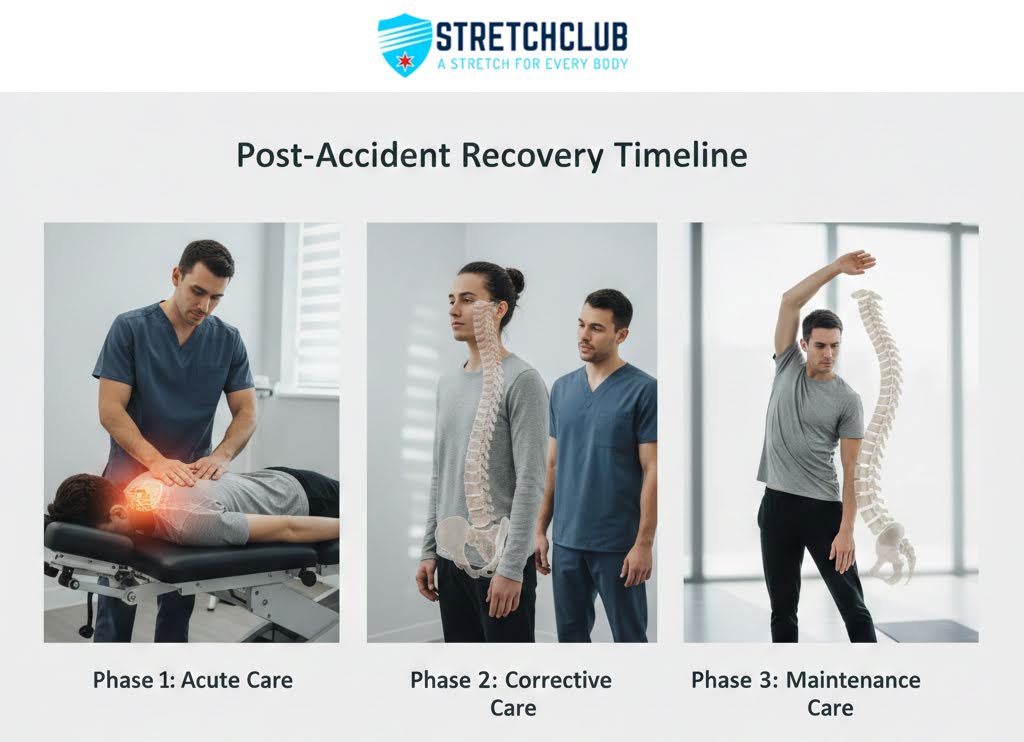
Post-accident chiropractic care typically follows three distinct phases, each serving a critical purpose in your healing journey. The acute phase focuses on pain relief and reducing inflammation, usually lasting 2-4 weeks with more frequent visits. During this initial period, most patients visit 3-4 times per week as we work to stabilize your spine, reduce swelling, and address the immediate effects of trauma on your musculoskeletal system.
The corrective phase begins after acute symptoms improve, focusing on restoring alignment, rebuilding strength, and correcting compensatory movement patterns. Lasting 4-8 weeks, visits typically reduce to 2-3 times per week. The final maintenance phase involves periodic visits—usually monthly or bi-monthly—to keep your spine aligned and prevent future injuries.
The Injury Severity Matrix: Understanding Your Personal Timeline
To provide clearer expectations, the Croft whiplash injury grading system categorizes musculoskeletal trauma from Grade I (minimal symptoms) to Grade V (severe, requiring surgical stabilization), with different treatment frequencies and durations. Mild injuries (Grade I–II) involve minor soft-tissue strain, moderate injuries (Grade III) include ligament damage and neurological symptoms, and severe injuries (Grade IV–V) involve structural damage needing intensive care.
Recovery timelines also depend on individual factors like overall health, psychological state, and pre-injury fitness, which can influence healing more than age alone. For example, a mild soft-tissue injury in a healthy 30-year-old athlete may resolve in 4–6 weeks with early care and active rehab, while a moderate whiplash in a 65-year-old with spine degeneration may require 12–16 weeks of treatment with closer monitoring and tailored home exercises.
Factors That Determine Your Treatment Timeline
Injury severity is the primary factor in treatment duration, but not the only one. Minor soft-tissue injuries may heal in 4–6 weeks with consistent care, while severe trauma like herniated discs or multiple injuries can require 3–6 months. Early treatment—within 72 hours—usually leads to faster recovery than waiting weeks, when inflammation and compensatory patterns have set in.
Health, age, and lifestyle affect recovery—older adults or those with comorbidities heal slower, while younger, active individuals recover faster. Consistent treatment and home exercises speed healing, and at StretchClub, combining chiropractic adjustments with specialized stretching accelerates recovery by addressing both spine and soft tissues.
What a Typical Treatment Schedule Looks Like by Injury Grade
For mild injuries (Grade I-II), most patients begin with 3-4 sessions per week for the first 2 weeks, then reduce to 2 times weekly for weeks 3-6. Total treatment typically spans 4-8 weeks with 15-25 total sessions. During these visits, we perform spinal adjustments to correct minor misalignments and provide assisted stretching to release protective muscle tension, preventing acute injuries from becoming chronic conditions.
Moderate injuries (Grade III) usually need 3–4 sessions per week for weeks 1–4, then 2–3 weekly for weeks 5–12, totaling 30–45 sessions over 8–16 weeks. Severe injuries (Grade IV) may start with 4 weekly sessions, tapering to 2 per week by month 6, totaling 50–70 sessions over 4–6 months. Timelines vary—healthy younger patients may finish sooner, while older patients with comorbidities may need longer.
Why Stopping Treatment Too Early Causes Problems
One of the biggest mistakes accident victims make is discontinuing treatment once pain subsides. Pain relief doesn’t equal complete healing—it simply means inflammation has decreased enough that you no longer feel symptoms. Underlying spinal misalignments, weakened ligaments, and incomplete soft-tissue healing remain, making you vulnerable to re-injury and chronic pain down the road.
Stopping treatment too soon can cause your body to revert to compensatory movement patterns, stressing your spine and joints and creating new pain. Incomplete healing also leads to scar tissue, reduced flexibility, and restricted movement. Completing your full treatment plan ensures proper spinal alignment, restores soft-tissue strength, and prevents chronic pain.
The StretchClub Difference: Integrated Care for Faster Recovery
StretchClub stands out by combining advanced spinal adjustments with specialized assisted stretching. While chiropractic care—focused on diagnosing and treating musculoskeletal disorders through spinal adjustments—corrects misalignments, assisted stretching targets muscle tightness and soft-tissue restrictions that adjustments alone cannot fully resolve.
This approach can shorten treatment by addressing multiple aspects of your injury at once. Our therapists access muscle groups and stretches you can’t do on your own, releasing tension that limits healing. Many patients see improvements within the first few visits, with reduced headaches, increased range of motion, and less aching. Our protocols maximize flexibility, minimize pain, and help you transition from acute care to maintenance faster.
How Treatment Compares to Other Recovery Options
Understanding chiropractic care’s role in recovery helps you make informed choices. Physical therapy focuses on improving movement and function through exercises, manual therapy, and self-management. While it complements chiropractic’s focus on spinal alignment, PT often requires longer treatment to achieve similar pain relief.
Pain management is a multidisciplinary approach using medications, procedures, and support to address pain, often targeting symptoms rather than causes. Chiropractic provides immediate relief and alignment, physical therapy builds strength and mobility, and pain management supports ongoing care. StretchClub combines the most effective elements of all three for faster, more comprehensive results.
Recognizing When You’re Ready to Transition to Maintenance
Several indicators signal that you’re ready to reduce visit frequency and transition to maintenance care. First, your pain should be minimal or absent during daily activities and not return between appointments. Second, you should have regained most or all of your pre-accident range of motion without stiffness or restriction. Third, you should be able to perform your prescribed home exercises correctly and consistently without discomfort.
Your chiropractor will monitor spinal alignment, muscle balance, and movement patterns to gauge progress. Once these indicators are stable, appointments can be spaced out. Maintenance care—typically monthly or bi-monthly—helps prevent future injuries and sustain the wellness achieved through treatment.
Start Your Recovery Journey with a Clear Plan
Understanding chiropractic treatment timelines helps you set realistic expectations. At StretchClub, we create comprehensive plans tailored to your injury, age, health, and lifestyle to ensure complete healing and prevent chronic issues. Our advanced chiropractic techniques combined with assisted stretching deliver faster results, helping you return to life pain-free.
Don’t let uncertainty delay your recovery. Book a free stretch session today on our website or at Naperville (630-922-6500), Yorkville (630-882-9695), or Oswego (630-636-6180). During your evaluation, we’ll assess your injuries, explain your personalized treatment timeline, and start you on the path to complete recovery. Let StretchClub guide you every step of the way.
FAQs
How many chiropractic sessions will I need after a car accident?
Treatment duration depends on injury severity and individual factors. Mild injuries typically require 15-25 sessions over 4-8 weeks, moderate injuries need 30-45 sessions over 8-16 weeks, and severe injuries may require 50-70 sessions over 4-6 months. Your age, overall health, and pre-injury fitness level significantly influence these timelines—healthier, younger patients often recover faster than those with comorbidities or sedentary lifestyles.
Can I stop going to the chiropractor once my pain is gone?
No, pain relief doesn’t equal complete healing. Underlying spinal misalignments and incomplete soft-tissue healing remain even after pain subsides, making you vulnerable to chronic problems if treatment stops prematurely. Completing your full treatment plan ensures proper healing and prevents long-term complications that plague many who discontinue care too early.
How often should I see a chiropractor in the first month after an accident?
During the first 2-4 weeks, most patients need 3-4 visits per week to address acute inflammation, stabilize the spine, and prevent acute injuries from becoming chronic. This intensive initial phase is critical for optimal recovery. As symptoms improve, visit frequency reduces to 2-3 times weekly during the corrective phase.
Does age affect how long I’ll need chiropractic treatment?
Yes, age is one of several important modifiers to recovery timelines. Older adults often heal more slowly and may require extended treatment plans compared to younger patients with similar injuries. However, research shows that overall health status and pre-injury fitness level sometimes influence recovery more than age alone—a healthy, active 60-year-old may recover faster than a sedentary 40-year-old with poor health.
Will my insurance cover long-term chiropractic treatment?
Most auto insurance policies include medical payment coverage or personal injury protection that covers necessary chiropractic care after accidents. StretchClub works with insurance companies regularly and provides thorough documentation supporting your treatment plan. We help you understand your coverage and ensure you receive the care you need without unexpected costs.
How is treatment different at StretchClub compared to traditional chiropractors?
StretchClub combines advanced chiropractic adjustments with specialized assisted stretching therapy that most practices don’t offer. This integrated approach addresses both spinal alignment and soft-tissue healing simultaneously, often shortening overall treatment duration. Our therapists access muscle groups you cannot stretch effectively on your own, accelerating recovery and improving long-term outcomes.
What happens if I miss appointments during my treatment plan?
Missing appointments slows your recovery and may require additional sessions to achieve the same results. Consistency is crucial—your body heals progressively with each treatment, and gaps in care allow inflammation to return and compensatory patterns to re-establish. Following your prescribed schedule ensures the fastest, most complete recovery possible.