The MRI results confirm what the radiating pain already told you: herniated disk. Now you’re facing limited options—medications that mask symptoms without fixing the problem, injections providing temporary relief, or surgery with its risks and recovery time. Your doctor says “wait and see” or suggests increasingly aggressive interventions, but what about the middle ground between doing nothing and going under the knife?
StretchClub® in Yorkville IL specializes in treating herniated disks through doctor-designed programs combining gentle chiropractic decompression, targeted stretching, and strategic strengthening. Most herniated disk patients recover successfully without surgery when they receive comprehensive care addressing why the disk herniated while creating optimal conditions for natural healing. Whether you’re dealing with lumbar disk herniation causing leg pain or cervical herniation creating arm symptoms, discover how integrated conservative treatment helps you avoid surgery while regaining function.
What’s Really Happening with Your Herniated Disk
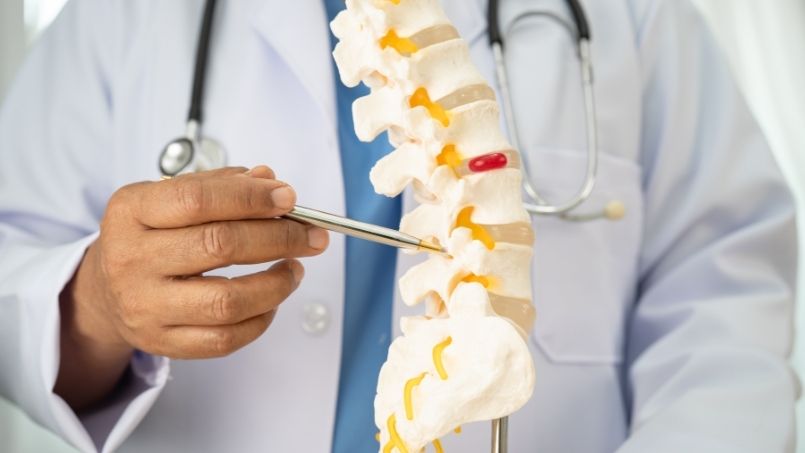
A herniated disk occurs when the soft inner material pushes through a tear in the tough outer layer, pressing on nearby nerves. This can cause severe pain radiating down the arm or leg, numbness or tingling in specific areas, or even muscle weakness.
However, imaging doesn’t show why the disk herniated. Disks don’t fail suddenly—they’re affected by months or years of uneven pressure. Tight muscles may pull vertebrae out of alignment, weak core muscles may allow excessive motion, or poor posture may cause constant compression. Understanding these causes is crucial, since treating only the herniation won’t stop it from returning if the same forces remain.
Why Most Herniated Disks Heal Without Surgery
Studies show that 80–90% of herniated disk patients recover significantly within 6–12 weeks using conservative treatment. The body heals naturally as immune cells reabsorb herniated material, inflammation decreases, and nerve function returns.
Conservative care supports this process by easing pressure on the disk, improving circulation, reducing compensatory strain, and strengthening stability to prevent re-injury. Surgery is reserved for severe cases involving neurological loss, bowel or bladder issues, or pain unresponsive to non-surgical care. For most, starting conservatively is the best approach.
The StretchClub Approach to Herniated Disk Recovery
Gentle Chiropractic Decompression
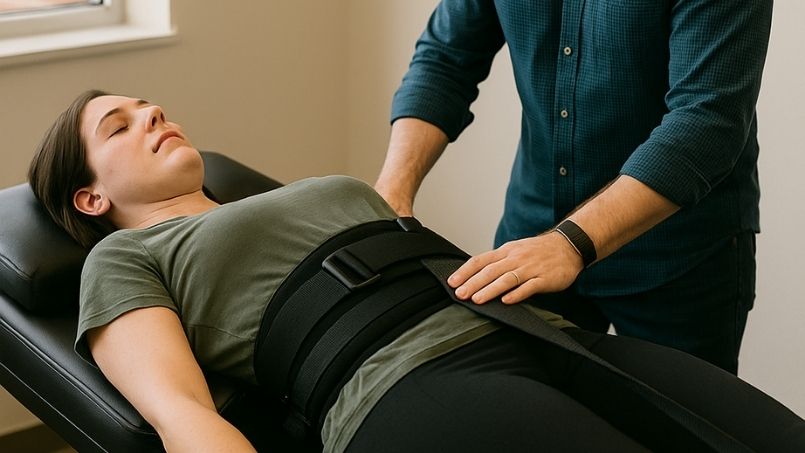
Chiropractic care for herniated disks at StretchClub uses gentle decompression to create negative pressure in the disk space, helping herniated material retract from nerves. Unlike aggressive manipulation, these controlled traction techniques safely separate vertebrae and reduce disk pressure.
Targeted Partner-Assisted Stretching
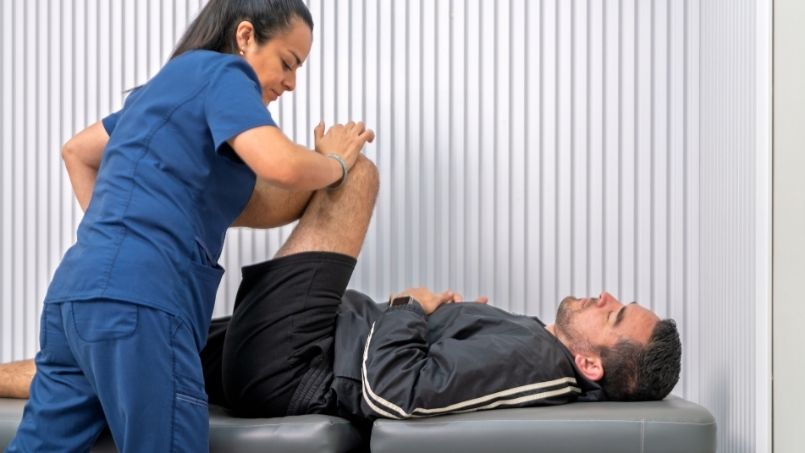
Doctor-designed stretching programs help relieve chronic tightness contributing to disk problems. Tight hip flexors, hamstrings, or piriformis muscles can strain the spine and mimic disk symptoms.
Using PNF and dynamic partner-assisted stretching, each session targets deep restrictions that self-stretching can’t reach. Focus areas include the psoas, quadratus lumborum, piriformis, and hamstrings. Most patients notice improved mobility and reduced muscle tension within 2–4 weeks.
Strategic Strengthening and Stabilization

Once symptoms begin improving, athletic trainers guide strengthening to restore core stability and prevent re-injury. Early exercises retrain stabilizer muscles for proper activation before progressing to real-world movements. Correct breathing techniques enhance core engagement, creating lasting spinal support.
Coordinated Team Care
Your chiropractor and training team work together to ensure every component supports your recovery. Regular progress reviews allow adjustments if flexibility, strength, or neurological recovery slows. This integrated approach ensures safe, personalized, and effective healing.
What to Expect During Your Recovery Journey
Comprehensive Initial Assessment
Your first visit involves a detailed evaluation to understand both your herniation and its causes. The team reviews MRI results, assesses symptoms and spinal mobility, checks muscle balance, and identifies postural or movement habits adding stress to the disk.
A personalized plan outlines your treatments, frequency, and recovery goals. Most patients begin with sessions several times a week for 2–4 weeks, then taper as pain subsides and strengthening becomes the focus.
Recovery Timeline
Many patients notice relief within 2 weeks as inflammation and nerve pressure decrease. Functional improvements usually appear within 4–8 weeks, with full recovery in 3–6 months as strength and stability return. Timelines vary based on herniation severity, health, and treatment consistency, and the team adjusts care as you progress.
Activity Modification and Home Care
Recovery requires smart activity adjustments—not bed rest. Avoid prolonged sitting, heavy bending, or improper lifting. Stay lightly active using correct body mechanics.
You’ll receive tailored home exercises and stretches to maintain progress between sessions and support long-term recovery.
Conditions and Symptoms Successfully Treated
The integrated approach effectively treats various herniated disk presentations:
- Lumbar disk herniations causing lower back pain, leg pain (sciatica), numbness or tingling following specific nerve distributions, and weakness in foot or leg muscles
- Cervical disk herniations creating neck pain, arm pain, shoulder blade pain, and upper extremity numbness or weakness
- Facet joint syndrome creating pain patterns similar to disk problems that improve through alignment corrections and strengthening
- Piriformis syndrome causing sciatic-type symptoms that resolve through targeted stretching and muscle release
- Spinal stenosis benefiting from decompression and postural corrections reducing nerve compression
The comprehensive approach addresses not just the herniated disk itself but related conditions often accompanying or confused with disk problems.
Who Benefits from Conservative Herniated Disk Care

Patients with recent herniations—symptoms present for weeks to a few months—typically respond most quickly to conservative treatment. Those with chronic herniations present for months or years also improve, though recovery often requires more time as compensatory patterns have become deeply ingrained.
Young to middle-aged adults often experience excellent outcomes as their tissues retain good healing capacity. Older adults benefit as well, though recovery timelines may extend. Athletes and active individuals appreciate the conservative approach, allowing gradual return to activities without surgical recovery periods interrupting training or competition. Patients wanting to avoid surgery or unable to undergo surgery due to other health conditions find that conservative care provides meaningful improvement even when complete resolution proves impossible.
Insurance and Payment Options
StretchClub accepts most commercial health insurance, including Blue Cross Blue Shield PPO plans for chiropractic care components of treatment. The team verifies your specific benefits during consultation, ensuring you understand coverage and costs before committing to treatment.
For those injured in auto accidents, StretchClub works with auto insurance claims to ensure you receive the care needed for recovery. The administrative team handles insurance paperwork and communications, allowing you to focus on healing rather than navigating complex insurance processes. While Medicare and Medicaid are not accepted, flexible payment options make treatment accessible for those with other coverage or paying out of pocket.
Begin Your Recovery at StretchClub Yorkville
StretchClub’s doctor-designed programs have helped countless herniated disk patients avoid surgery while regaining function and returning to normal activities. Dr. Alyssa Holum expertise in treating disk conditions ensures you receive safe, effective care tailored to your specific presentation.
Don’t let herniated disk pain continue limiting your life, or rush into surgery without exploring conservative options that work for the majority of patients. Contact StretchClub Yorkville today to schedule your free consultation. Experience how integrated care combining gentle chiropractic decompression, targeted stretching, and strategic strengthening can help you recover naturally from herniated disk problems.
Frequently Asked Questions
Can chiropractic care help herniated disks or make them worse?
Appropriate chiropractic care using gentle decompression techniques helps the majority of herniated disk cases by reducing pressure on nerves and creating conditions for natural healing. Aggressive manipulation might worsen symptoms, which is why StretchClub uses specialized gentle techniques specifically designed for disk conditions. Dr. Alyssa Holum’s training ensures treatment remains safe and effective for your particular herniation pattern.
How long does it take to recover from a herniated disk without surgery?
Most patients notice improvement within 2-4 weeks of consistent treatment, with significant functional recovery occurring within 6-12 weeks. Complete healing often takes 3-6 months as tissues fully repair and strength rebuilds. Recovery timelines vary based on herniation severity, how long symptoms existed before treatment, and individual healing capacity.
Will I need surgery for my herniated disk?
The majority of herniated disk patients—approximately 80-90%—recover successfully with conservative treatment and don’t require surgery. Surgery becomes necessary primarily for cases with progressive neurological deficits, cauda equina syndrome, or intractable pain unresponsive to 6-12 weeks of appropriate conservative care. Starting with conservative treatment makes sense for most patients.
What’s the difference between a herniated disk and a bulging disk?
A bulging disk shows generalized disk expansion beyond normal boundaries, but the outer layer remains intact. A herniated disk involves the inner material breaking through a tear in the outer layer, often pressing more directly on nerve roots. Herniated disks typically cause more severe symptoms, though both respond well to conservative treatment addressing underlying biomechanical issues.
Can a herniated disk heal completely?
Yes, most herniated disks improve significantly as the body reabsorbs protruding material and inflammation resolves. Follow-up MRIs often show substantial reduction or complete resolution of herniations in patients who’ve recovered through conservative care. Even when some herniation remains visible on imaging, symptoms typically resolve completely as nerve irritation decreases.
What activities should I avoid with a herniated disk?
During acute phases, avoid prolonged sitting, forward bending especially while lifting, high-impact activities like running or jumping, and twisting motions under load. As symptoms improve, gradually reintroduce activities under guidance from your treatment team. Permanent activity restrictions are rarely necessary once you’ve fully recovered and built appropriate stability.
Is the treatment painful?
No. The gentle decompression techniques, partner-assisted stretching, and progressive strengthening should never cause sharp pain or significant discomfort. You’ll feel intensity as muscles stretch and tissues release, but treatment remains within comfortable limits throughout. If any technique causes pain, your specialist immediately adjusts the approach.
How is this different from just doing physical therapy exercises?
No. The gentle decompression techniques, partner-assisted stretching, and progressive strengthening should never cause sharp pain or significant discomfort. You’ll feel intensity as muscles stretch and tissues release, but treatment remains within comfortable limits throughout. If any technique causes pain, your specialist immediately adjusts the approach.