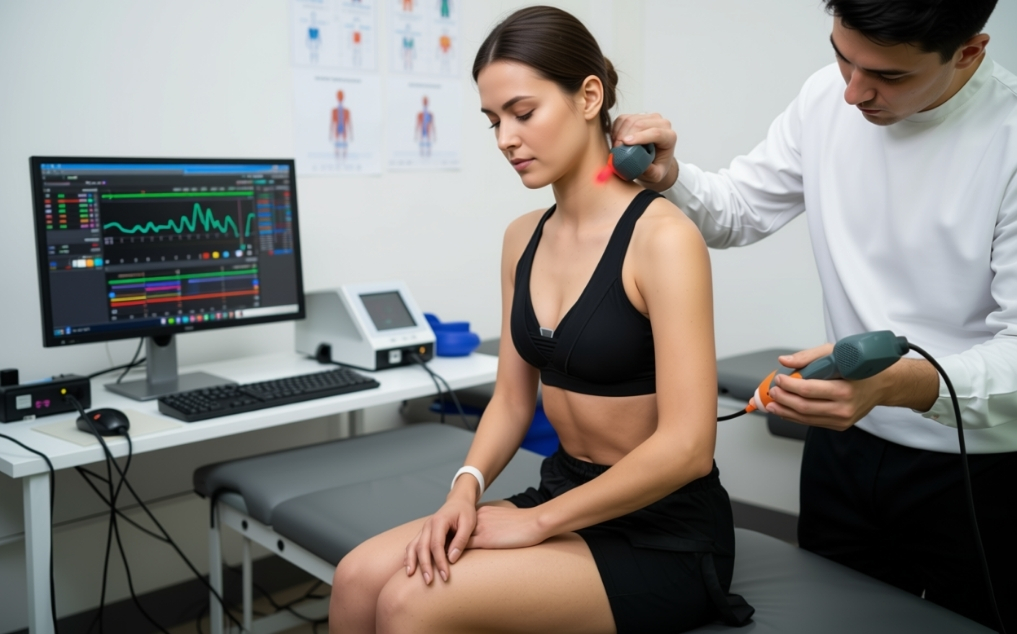
Tension is your body’s automatic response to stress, poor posture, and repetitive movement. Even if you stretch, use heat, or get a massage, the relief is temporary because these methods don’t reset the nervous system pattern that keeps your muscles guarded. Until that pattern is retrained, the tension returns.
Professional stretching at StretchClub® in Naperville interrupts those protective patterns and teaches your body to relax for real. Dr. Adam Macek and his team use dynamic partner-assisted stretching and PNF techniques to release deep tension, improve mobility, and reprogram your nervous system. The result is lasting relief—not just symptom management.
The Tension Trap: Why Your Body Holds Tension
Your muscles hold tension for a reason. When your nervous system senses threat—whether from stress, poor posture, injury, or repetitive strain—it triggers protective muscle guarding. Muscles tighten to limit movement and shield vulnerable areas. This response is healthy in the short term, but problems arise when that tension becomes chronic.
Chronic tension turns into a loop. Your nervous system begins to treat tightness as “normal,” so you move cautiously, which further restricts your mobility. These limited patterns create even more tension as your body works harder to compensate. Stress and anxiety compound the issue by triggering additional muscle guarding. Over time, tension becomes your baseline, and true relaxation feels unfamiliar.
Professional Stretching: Interrupting the Tension Cycle
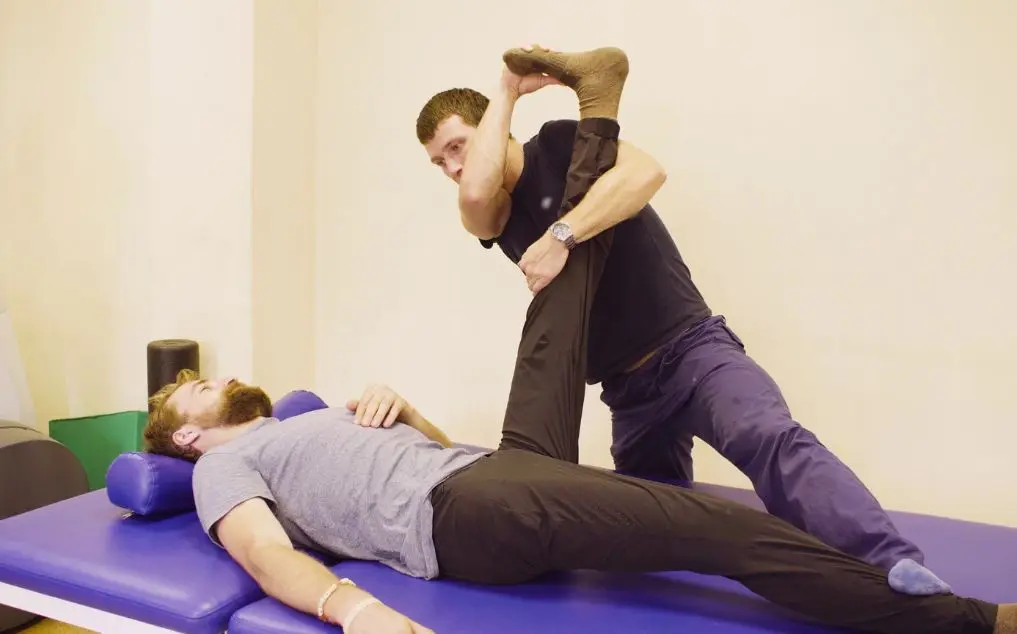
Professional stretching works differently from at-home methods because it targets the nervous system—not just the muscles. With dynamic partner-assisted stretching, trained professionals guide your body into positions where your nervous system learns that full relaxation is safe. Your muscles lengthen without triggering protective tension, breaking the cycle that keeps them tight.
This nervous system retraining is what creates lasting relief. Each session reinforces the message that your body doesn’t need to hold chronic guarding. Over time, your baseline tension drops, your movement improves, and your body naturally stays more relaxed.
The Release Experience: What It Feels Like
During a professional stretching session, many people feel tension melting away as muscles release and the nervous system quiets down. Mobility improves, stiffness fades, and there’s a deep sense of relief afterward.
This isn’t just a temporary effect—it’s the result of retraining your nervous system. While some tension may return based on stress or daily habits, your overall baseline continues to improve with consistent sessions until a relaxed state becomes your new normal.
Dynamic Stretching for Rapid Tension Release
Static stretching—holding a stretch for 30 seconds—provides minimal benefit for chronic tension because it doesn’t engage your nervous system’s protective patterns. Dynamic partner-assisted stretching, where trained professionals actively guide your muscles through controlled movement, creates immediate tension release. Your nervous system experiences real change in real time.
When Dr. Macek’s team uses dynamic stretching on your chronically tight neck, shoulders, lower back, or hip muscles, the release can be dramatic. Tension that’s been present for months or years can decrease noticeably within a single session. Many people report feeling their shoulders drop, their neck relax, or their lower back release as protective tension finally surrenders.
PNF: Retraining Protective Reflexes
Proprioceptive neuromuscular facilitation (PNF) takes tension relief beyond simple stretching by directly retraining your nervous system’s protective reflexes. Your body maintains chronic tension through reflexive muscle guarding—your nervous system automatically contracts muscles as a protective response. PNF techniques use specific movement patterns and timing to stimulate proprioceptors in ways that reset these protective reflexes.
When PNF is applied to chronically tense areas, your nervous system literally resets its protective programming. The reflex that’s been automatically tensing your muscles can be interrupted and retrained. This is why PNF produces such rapid, dramatic tension relief in many people. You’re not just stretching—you’re neurologically resetting how your body controls tension.
PNF Improves Both Muscle and Tendon Properties
The benefits of PNF go deeper than nervous system retraining. A 6-week randomized controlled trial examining PNF stretching training found that it not only increased range of motion but also decreased tendon stiffness in the gastrocnemius and Achilles tendon complex. This means PNF creates structural changes in both your muscles and tendons, making them more flexible and resilient.
These aren’t temporary changes—they’re adaptations in your actual tissue properties. Your tendons become less stiff, your muscles become more compliant, and your overall movement system becomes more efficient. This is why PNF produces lasting results. You’re not just changing how your nervous system perceives tension; you’re changing the actual structural properties of your muscles and tendons over time.
Tension from Stress and Emotional Factors
Tension isn’t just physical—your emotions directly shape how your muscles behave. Stress, anxiety, and emotional pressure trigger your nervous system, causing muscle tightening: clenched jaws, raised shoulders, and a tense lower back. Because these emotional-somatic patterns are stored in the body, professional stretching helps release both the physical and emotional layers of tension.
As your muscles release, your nervous system shifts from “fight or flight” into a calmer, restorative state. Many people feel not only looser but also mentally clearer and emotionally lighter after sessions. The relief extends far beyond the muscles.
Chronic Tension and Pain Connection
Chronic tension is a major contributor to chronic pain. Tight neck muscles can trigger headaches; tight hips and lower back muscles contribute to back pain; tense shoulders and chest muscles create ongoing neck and shoulder discomfort. Pain then increases tension, creating a reinforcing cycle.
Professional stretching disrupts this cycle by releasing the underlying tension that drives pain. Many people discover their pain is tension-based rather than structural. Through systematic release, pain often improves dramatically. A professional assessment can clarify whether your discomfort stems primarily from tension or another cause.
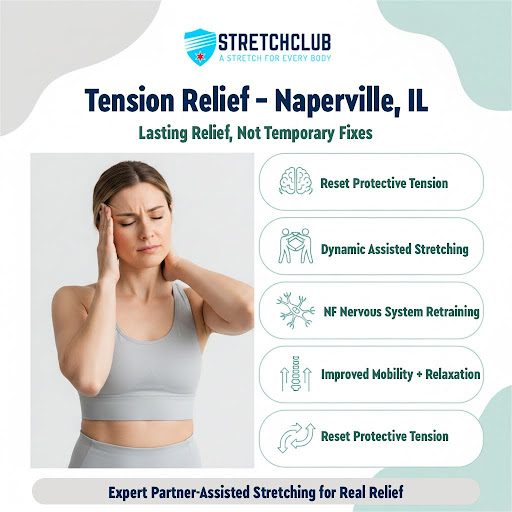
Postural Tension and Movement Compensation
Your posture plays a major role in how much tension your body holds. Forward head posture tightens the neck, rounded shoulders tighten the chest, and an anterior pelvic tilt tightens the hip flexors and lower back. These positions keep your muscles tense all day. Professional stretching can release that tension, but lasting relief also requires improving posture and movement patterns.
Our approach combines stretching with postural assessment and correction. We identify the positions causing tension, build your awareness of better alignment, and teach movement patterns that reduce daily strain. Together, this creates long-term relief—not just temporary release after each session.
Tension Relief Timeline and Consistency
Most people feel noticeable relief after their first session. Some tension may return within 24–48 hours due to stress and daily habits, but your overall baseline still improves. With consistent sessions—usually 1–2 times per week—your baseline tension steadily decreases. Most clients experience meaningful, lasting relief within 4–8 weeks.
Consistency is key because you’re retraining your nervous system. One session resets it temporarily; repeated sessions create lasting change. Over time, your body learns it doesn’t need to hold chronic tension, and a relaxed baseline becomes your new normal.
Your Path to Lasting Tension Relief
Chronic tension doesn’t require a lifetime of temporary fixes and symptom management. When addressed through professional stretching guided by trained experts who understand nervous system retraining, genuine, lasting relief is achievable. At StretchClub in Naperville, we help you move from chronic tension toward sustainable relaxation and improved function.
Start with a free consultation where we’ll assess your tension patterns, identify your specific restrictions, and create a personalized stretching program tailored to your goals—whether for pain relief, stress management, or functional improvement. Book your free stretch session online, call (630) 922-6500, or email info@stretchclub.com to begin your tension relief journey today.
FAQs
How is professional stretching different from massage for tension relief?
Massage provides mechanical relief by manipulating tissue. Professional stretching combines mechanical relief with nervous system retraining through guided dynamic movement and PNF techniques. While massage feels good temporarily, professional stretching creates lasting relief because it retrains how your nervous system controls tension. Many people benefit from both approaches together.
Will one professional stretching session eliminate my chronic tension?
One session provides immediate relief and nervous system reset, but chronic tension patterns typically require multiple sessions to retrain. Your body’s protective programming didn’t develop overnight, and retraining it requires consistency. Most people achieve substantial relief within 4-8 weeks of regular sessions, then maintain results through ongoing maintenance.
Can professional stretching help tension headaches caused by neck tightness?
Absolutely. Tension headaches often stem from chronically tight posterior neck muscles and the upper trapezius. By releasing this deep tension through professional stretching, we address the root cause of tension headaches. Many patients report significant headache reduction or elimination as neck tension releases.
What’s the difference between stretching and yoga for tension relief?
Yoga includes stretching, breathing, and mindfulness practices. Professional stretching focuses specifically on releasing tension through guided dynamic movement and PNF techniques. Both can relieve tension—yoga emphasizes mindfulness and overall wellness, while professional stretching emphasizes nervous system retraining and efficient tension release.
If my tension is from stress and emotions, will stretching actually help, or is it just physical?
Chronic tension from stress and emotions is very real and very treatable through professional stretching. Your emotions create physical tension through your nervous system—that tension is real muscle tightness. Professional stretching releases that physical tension while also helping your nervous system transition toward relaxation and recovery. The emotional and physical components are inseparable.
How often should I get professional stretching to maintain tension relief?
Most people benefit from 1-2 sessions weekly initially to reduce baseline tension. Once relief is achieved, many maintain results with 1-2 sessions monthly for maintenance. Some people with very high stress levels benefit from weekly ongoing sessions. Dr. Macek will recommend a maintenance frequency based on your specific situation.
Can professional stretching help tension related to poor posture, or do I need to fix my posture first?
Professional stretching and postural correction work together. We release the tension your poor posture creates while teaching you better positioning and movement patterns. Stretching releases the tension; postural retraining prevents tension from returning. The combination is most effective.
Is professional stretching safe if I have chronic pain or existing conditions?
Yes. Professional stretching is specifically designed to be safe and is adjusted based on your condition. We assess your situation and adjust intensity and technique accordingly. In fact, professional stretching often helps resolve chronic pain by addressing the underlying tension driving it. Always inform Dr. Macek of any conditions or pain you have.