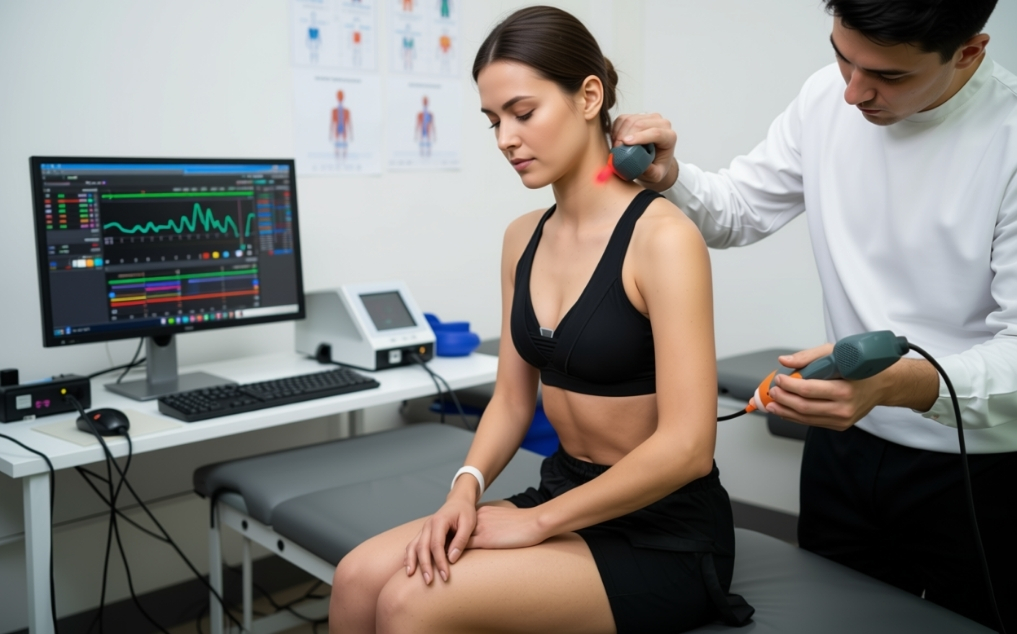

Shoulder pain limits what you can do. Reaching overhead, throwing a ball, or even sleeping on the affected side can become painful. What starts as a nagging ache often develops into a chronic issue that affects work, activities, and quality of life. Many people try rest, ice, medication, or generic physical therapy—only to have the pain return once normal activity resumes.
At StretchClub® in Naperville, our specialized programs combine PNF techniques with dynamic partner-assisted stretching to pinpoint the muscle imbalances, movement dysfunction, and compensatory patterns causing your shoulder pain. By addressing not just the shoulder but the entire kinetic chain—core, thoracic spine, and scapula—we provide true rehabilitation rather than temporary symptom relief.
Why Shoulder Pain Persists: The Role of Movement Dysfunction
Shoulder pain rarely comes from the joint alone. As the body’s most mobile joint, the shoulder compensates when other areas—core, thoracic spine, or scapula—don’t function properly.
While rotator cuff issues or joint damage can cause pain, most shoulder problems stem from scapular dyskinesis, poor core stability, tight chest muscles, weak posterior shoulders, and restricted thoracic movement. These dysfunctions force the shoulder to overwork, creating pain and, over time, tissue damage if left untreated.
How Compensation Patterns Lock in Chronic Shoulder Pain
When your shoulder hurts, your nervous system protects it by limiting motion and changing how muscles fire. You stop using the full range, tense your shoulder shrug muscles, and alter reaching or throwing patterns. These compensations reduce pain short-term but become long-term problems, as your nervous system treats restricted movement as “normal.”
That’s why generic shoulder exercises often fail—they strengthen a shoulder that’s moving incorrectly, reinforcing the very patterns causing your pain.
The Comprehensive Assessment: Understanding Your Specific Shoulder Problem
Shoulder rehabilitation starts with identifying what’s truly causing your pain. A thorough assessment examines shoulder mobility, scapular movement, thoracic spine flexibility, core stability, and functional movement patterns. This reveals whether your pain stems from rotator cuff weakness, scapular dyskinesis, thoracic restriction, core dysfunction, or a combination.
Many patients are surprised to learn the problem isn’t the shoulder itself. Impingement may result from a tight thoracic spine, while supposed rotator cuff issues often come from scapular dyskinesis and weak serratus anterior. Accurate diagnosis drives effective treatment.
Dynamic Stretching for Shoulder Mobility Restoration
Shoulder pain often involves restricted mobility—your rotator cuff is tight, your pectoralis major is shortened, your posterior shoulder muscles are tense. Static stretching provides minimal benefit because it doesn’t address the nervous system’s protective guarding of these muscles. Dynamic partner-assisted stretching, where Dr. Macek’s trained team actively guides your shoulder through movement, creates genuine mobility gains.
When your shoulder is stretched dynamically under professional guidance, your nervous system experiences real release and retraining. Your muscles learn to lengthen without triggering protective tension. Your range of motion increases noticeably, often within a single session. Many patients experience immediate relief because the mobility restriction that’s been limiting their movement is genuinely restored.
Rotator Cuff and Posterior Shoulder Release
The rotator cuff muscles—supraspinatus, infraspinatus, teres minor, and subscapularis—are frequently tight in people with shoulder pain. When these muscles are restricted, they limit your shoulder’s range of motion and create impingement. Professional dynamic stretching specifically targets these deep shoulder muscles, releasing tension that self-directed stretching cannot address.
Posterior shoulder tightness compounds the problem. Tight posterior deltoids and infraspinatus muscles further restrict your shoulder, forcing compensation through your anterior shoulder and rotator cuff. Dynamic stretching releases both the superficial and deep structures, restoring your shoulder’s natural mobility.
Scapular Stabilization and Movement Training
Your shoulder blade (scapula) is your shoulder’s foundation. When your scapula doesn’t move properly—dyskinesis—your rotator cuff has to work overtime to stabilize your shoulder joint. This creates muscle fatigue, inflammation, and eventually pain. Many shoulder pain patients never address their scapular dysfunction, so their pain persists even after rotator cuff strengthening.
Dr. Macek’s rehabilitation program includes scapular assessment and corrective training. We teach your serratus anterior and lower trapezius to activate properly, correcting the scapular dyskinesis driving your pain. Through hands-on guidance and targeted exercises, your scapula learns to move smoothly and efficiently during shoulder movement.
Thoracic Spine Mobility: The Overlooked Shoulder Problem
Thoracic spine tightness is one of the most common overlooked causes of shoulder pain. Your thoracic spine needs to extend and rotate freely to allow your shoulder proper mobility. When your thoracic spine is restricted—which is extremely common in people who sit at desks—your shoulder has to compensate by moving excessively. This creates impingement, inflammation, and pain.
Our comprehensive approach includes thoracic spine assessment and mobility work. By restoring your thoracic spine’s natural extension and rotation, we remove a major stress driver on your shoulder. Many patients notice significant shoulder pain relief simply by improving their thoracic mobility, without even doing shoulder-specific work.
Core Stability and Kinetic Chain Integration
Your shoulder doesn’t exist in isolation. It’s part of a kinetic chain that includes your core, pelvis, thoracic spine, and scapula. When your core is weak, your entire kinetic chain becomes unstable. This instability forces your shoulder to work harder to compensate. Effective shoulder rehabilitation involves core assessment and stabilization exercises, ensuring that your entire kinetic chain supports proper shoulder function.
Neuromuscular Retraining via PNF: Retraining Your Nervous System
How PNF Goes Beyond Traditional Stretching
Proprioceptive Neuromuscular Facilitation (PNF) does more than standard stretching—it retrains your nervous system’s control of shoulder muscles. PNF uses specific patterns, timing, and resistance to stimulate proprioceptors and mechanoreceptors, sending precise signals to your brain about muscle position and tension.
Unlike passive stretching, PNF actively teaches your nervous system new movement patterns. Muscles aren’t just lengthened—they’re retrained to activate, relax, and coordinate efficiently. This neurological reprogramming is why PNF often delivers superior results for chronic shoulder pain.
PNF Evidence for Shoulder Pain: Frozen Shoulder and Impingement
The research backing PNF for shoulder pain is compelling. Meta-analyses demonstrate that PNF techniques significantly improve pain, mobility, and function in patients with frozen shoulder and subacromial impingement—two of the most common shoulder pain conditions. These improvements persist long-term because PNF addresses the underlying neuromuscular dysfunction, not just surface symptoms.
Randomized controlled trials comparing PNF to conventional physical therapy show that PNF produces superior outcomes in shoulder function and pain reduction. The mechanism is clear: PNF’s neurological approach creates lasting changes in how your nervous system controls your shoulder. Once your nervous system relearns efficient shoulder control through PNF, that learning persists—which is why PNF-based rehabilitation produces durable relief.
When Dr. Macek incorporates PNF into your shoulder rehabilitation, he’s not just treating your current pain—he’s retraining your nervous system to control your shoulder more efficiently and safely going forward.
Post-Injury and Post-Surgical Shoulder Rehabilitation
If your shoulder pain began after an injury, surgery, or trauma, the rehabilitation process is similar but often requires specific sequencing. Post-surgical shoulders need graduated loading—starting with gentle mobility work, progressing to controlled strengthening, then advancing to functional rehabilitation. We coordinate with your surgeon’s protocols and insurance (including most commercial plans like Blue Cross Blue Shield PPO) to ensure your rehabilitation supports optimal recovery.
Returning to Function: Your Shoulder Rehabilitation Journey
Shoulder pain rehabilitation isn’t about temporary relief—it’s about restoring your complete shoulder function so you can move, work, and play without limitation. Dr. Adam Macek and his team in Naperville understand exactly how to guide your rehabilitation from pain toward full functional restoration.
Start with a free consultation, where we assess your shoulder mobility, scapular movement, core stability, and overall movement patterns. We pinpoint the exact dysfunction causing your pain and show how a comprehensive shoulder rehabilitation program can restore proper function. Call (630) 922-6500 or book a free stretch online to take the first step toward lasting relief.
FAQs
Is my shoulder pain from a rotator cuff tear, or is it movement dysfunction?
Rotator cuff tears typically cause sharp pain with specific movements, often accompanied by weakness or inability to perform certain motions. Movement dysfunction usually creates diffuse shoulder discomfort that changes with different activities and positions. Our assessment can distinguish between the two. Many people assume they have rotator cuff tears when it’s actually scapular dyskinesis or thoracic tightness.
Why doesn’t rest help my shoulder pain, and why does it often get worse?
Rest without targeted rehabilitation often makes shoulder pain worse. When you stop moving your shoulder, your muscles weaken further, your protective tension increases, and your compensation patterns become more ingrained. Movement-based rehabilitation, when done correctly, actually accelerates recovery and prevents long-term dysfunction.
How much does poor posture contribute to my shoulder pain?
Significantly. Forward shoulder posture from desk work tightens your pectoralis major and creates scapular dyskinesis. This postural dysfunction forces your rotator cuff to work overtime. Addressing both your postural habits and your shoulder’s movement dysfunction is essential for lasting relief.
Can shoulder pain from overhead activities be resolved, or will I always have limitations?
Most overhead shoulder pain resolves when the underlying movement dysfunction is properly addressed. Scapular dyskinesis, thoracic tightness, and rotator cuff weakness can all be corrected through comprehensive rehabilitation. Many athletes and workers return to full overhead activities without pain or limitation.
What’s the difference between shoulder pain relief and shoulder rehabilitation?
Pain relief is temporary—it reduces symptoms without addressing the cause. Rehabilitation addresses the underlying movement dysfunction, muscle imbalances, and compensatory patterns causing your pain. Rehabilitation takes longer but produces lasting results, whereas pain relief often leaves you vulnerable to recurrence.
How long does shoulder rehabilitation take before I notice improvement?
Many patients notice improved mobility and reduced pain within 2-3 weeks. More substantial functional improvement typically takes 6-10 weeks of consistent rehabilitation. Your specific timeline depends on the nature of your dysfunction and your consistency with treatment.
If I had shoulder surgery, can stretch therapy help my rehabilitation?
Absolutely. We work closely with your surgeon’s protocols and progress your rehabilitation appropriately. Dynamic stretching combined with targeted strengthening accelerates post-surgical recovery. We coordinate with your insurance coverage to ensure your rehabilitation is covered.
Will my shoulder pain return once I stop coming in for treatment?
Once we’ve corrected your movement dysfunction, restored your shoulder mobility, and retrained your neuromuscular patterns, shoulder pain often stays resolved. Some patients benefit from occasional maintenance sessions, but many achieve lasting relief. Prevention through awareness of posture and regular movement practice helps maintain your results.