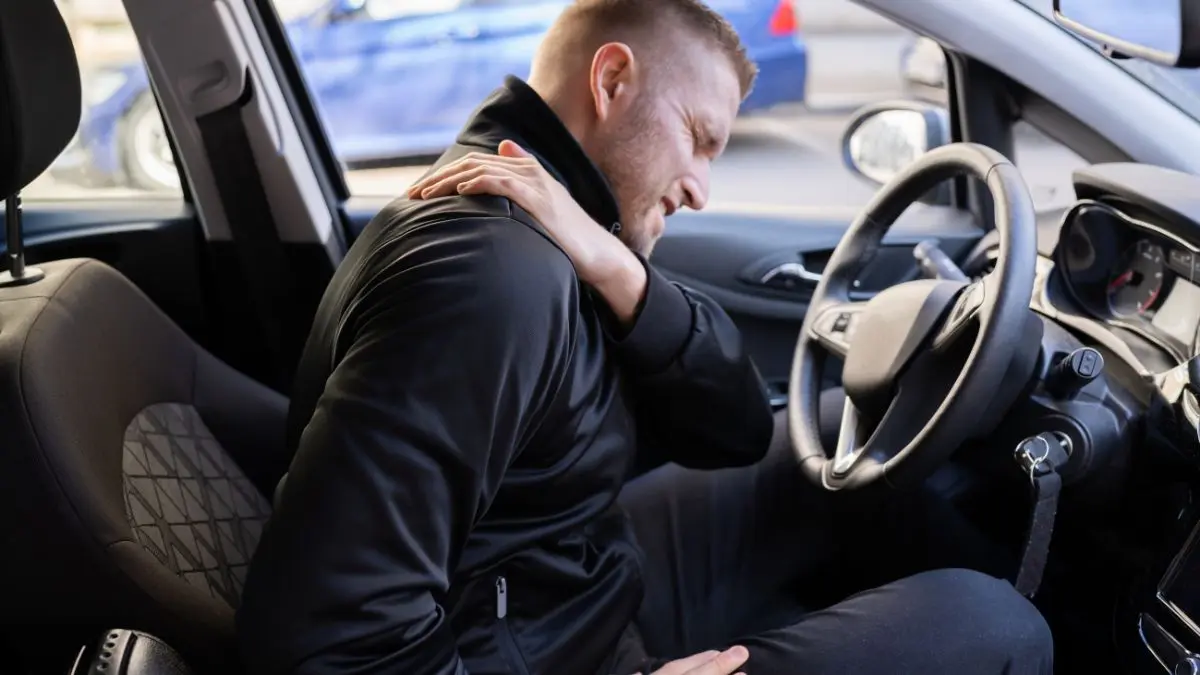
The moments after a car accident are chaotic. Adrenaline masks injuries, and safety and insurance are your immediate concerns. Days or weeks later, stiffness and pain can appear—a delayed reminder that your body absorbed significant impact. Just because it didn’t hurt immediately doesn’t mean the damage isn’t real. Your nervous system, muscles, and spine are still compensating for the trauma.
If you’re experiencing post-accident back pain in Naperville, you need recovery designed for accident-specific injury patterns—not generic treatment. Dr. Adam Macek and his team at StretchClub® use dynamic partner-assisted stretching and PNF techniques to release tension, restore mobility, and retrain your nervous system. Our goal isn’t just managing pain—it’s genuine healing.
The Accident Injury Cascade: Understanding Your Body’s Response
Auto accident injuries follow a predictable pattern. The impact forces your spine into unnatural positions, stretching muscles, ligaments, and joints, and sometimes compressing nerves. Your nervous system responds by activating protective muscle tension throughout your neck, shoulders, upper back, and lower back to limit movement and prevent further damage.
This response is helpful initially, but problems arise when tension persists. Chronic tightness and restricted movement lead to pain, reduced flexibility, and compensatory dysfunction that didn’t exist before the accident.
Why Rest Alone Can’t Restore Post-Accident Function
Conventional advice—rest, ice, and pain meds—manages acute symptoms but doesn’t address the chronic tension and movement dysfunction. Returning to activity without correcting these issues often worsens pain and restricts motion. Many end up in chronic pain simply because they weren’t given the tools to restore true function—only to manage symptoms.
Stretch-Based Recovery: Breaking the Post-Accident Pain Cycle
Stretch-based recovery works differently. Instead of waiting for time to heal and hoping protective tension gradually releases on its own, we actively engage your muscles through dynamic partner-assisted stretching. This approach systematically releases the trauma-induced tension holding your body in a protective pattern.
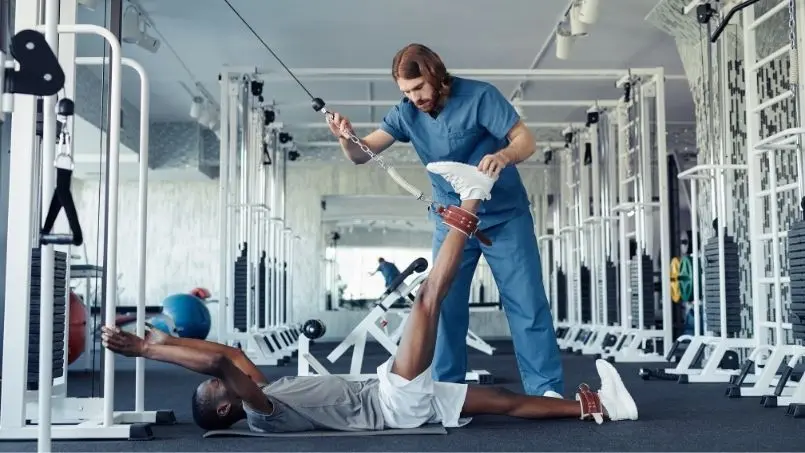
When Dr. Macek or his trained team uses dynamic stretching on your tight upper trapezius, restricted cervical spine, guarded thoracic region, or tension-locked lumbar muscles, your nervous system experiences genuine release. Your muscles, under professional guidance, recognize that full movement is safe. Protective guarding decreases. Your body transitions from “protect and restrict” back to “move and function.”
Nervous System Retraining Through Guided Movement
Stretch-based recovery isn’t passive. Your nervous system needs to relearn that movement is safe after accident trauma. You may have developed protective movement patterns—favoring one side, avoiding certain motions, and moving stiffly to prevent pain. Through guided stretching and movement, Dr. Macek’s team helps your nervous system recognize that full, free movement is possible again.
This retraining happens through repeated, guided movement experiences. Each session reinforces to your nervous system that movement doesn’t cause further injury. Over time, your protective patterns dissolve and natural movement quality returns.
PNF and Dynamic Stretching: The Accident Recovery Foundation
Proprioceptive neuromuscular facilitation combined with dynamic partner-assisted stretching creates the ideal environment for post-accident recovery. PNF techniques use specific movement patterns and timing to enhance neuromuscular function and reprogramming. When applied to accident-injured muscles, PNF accelerates your nervous system’s ability to release protective responses.
Dynamic stretching, where trained professionals actively guide your muscles through movement, creates neurological changes that static stretching cannot achieve. Your muscles don’t just lengthen—your nervous system resets its protective response. This combination is why stretch-based recovery produces faster, more complete healing than passive approaches.
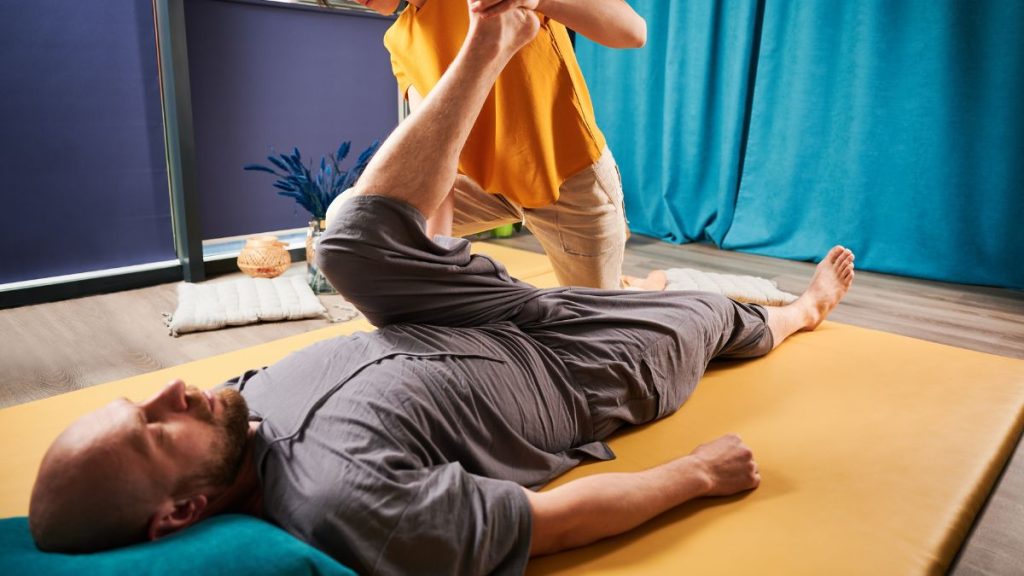
Addressing Multi-Region Accident Injuries
Auto accidents rarely injure just your lower back. The impact typically creates injury patterns throughout your kinetic chain—neck, shoulders, upper back, mid-back, and lower back all affected simultaneously. Treating only your lower back misses the bigger picture. Your entire spine needs integrated assessment and treatment.
Dr. Macek’s stretch-based recovery approach evaluates your complete injury pattern. We assess where muscle guarding is most significant, identify compensation patterns across your entire spine, and design a recovery that addresses your whole body. This integrated approach produces superior outcomes because it treats the actual injury pattern your accident created.
From Pain to Restoration: The Recovery Timeline
Stretch-based recovery follows a logical progression. Initially, we focus on releasing acute protective tension and restoring basic mobility. As your nervous system recognizes that movement is safe, we progress to more dynamic movement retraining. Finally, we work toward full functional restoration—returning to work, exercise, and activities without limitation or pain.
Most patients notice significant improvement within 2-3 weeks as protective tension begins releasing. Substantial functional restoration typically takes 8-12 weeks of consistent stretch-based treatment. Dr. Macek will provide a specific timeline based on your injury assessment.
Insurance and Accident Recovery Coordination
Your auto accident injuries are covered by your auto insurance. StretchClub Naperville coordinates directly with your insurance company—we handle all paperwork, verify your coverage, and manage claims so you can focus entirely on recovery. We also accept most commercial health insurance plans, providing additional flexibility for your coverage options.
Movement Testing and Functional Assessment
Your stretch-based recovery begins with thorough movement testing. Dr. Macek assesses your flexibility in all directions, evaluates your core stability, tests your spinal alignment, and observes your movement patterns. This assessment identifies your specific injury patterns and guides your personalized recovery plan.
Many accident victims are surprised to discover that their most significant restriction isn’t where they expected. Thorough testing reveals the real limitations driving your pain and dysfunction, ensuring your recovery targets what actually needs attention.
Understanding the Risk of Chronic Pain After Auto Accidents
Not everyone recovers well from auto accidents, and the reasons are more complex than just the physical injury. Research shows that in a 3-year follow-up of severely injured accident victims, 44% still reported pain, suggesting that without proper intervention, chronic pain after accidents is alarmingly common.
The factors influencing non-recovery extend beyond muscle tension. Studies document that psychological predictors—PTSD, anxiety, and depression shortly after the accident—are strongly linked to development of chronic pain. This biopsychosocial pattern means your recovery depends on addressing not just the physical injury, but also your emotional and nervous system response to the trauma. Central sensitization, depression, and sleep disturbance are significant predictors of long-term disability in accident survivors. This is why early, comprehensive stretch-based recovery matters—by addressing your physical injury promptly, you prevent the nervous system sensitization and psychological patterns that lead to chronic pain.
Movement Testing and Functional Assessment
Your stretch-based recovery begins with thorough movement testing. Dr. Macek assesses your flexibility in all directions, evaluates your core stability, tests your spinal alignment, and observes your movement patterns. This assessment identifies your specific injury patterns and guides your personalized recovery plan.
Many accident victims are surprised to discover that their most significant restriction isn’t where they expected. Thorough testing reveals the real limitations driving your pain and dysfunction, ensuring your recovery targets what actually needs attention.
Beyond Pain: Reclaiming Your Full Function
Stretch-based recovery isn’t just about reducing pain—it’s about restoring full function: complete range of motion, confident movement, pain-free work and exercise, and a nervous system that no longer perceives normal activity as a threat.
Dr. Adam Macek and his team in Naperville specialize in accident recovery, systematically addressing the specific injury patterns caused by trauma. Your recovery begins with a free consultation, where we assess injuries, identify tension and movement restrictions, and explain exactly how stretch-based treatment restores function.
Book your free stretch today and take the first step toward genuine recovery.
FAQs
When should I start stretch-based recovery after an accident—should I wait for swelling to decrease first?
You can begin as soon as you experience symptoms, even if swelling is still present. In fact, starting stretch-based recovery early prevents protective muscle patterns from becoming entrenched. Acute swelling typically resolves within days, but protective muscle tension can persist indefinitely if not addressed. Early intervention accelerates overall recovery.
How is stretch-based recovery different from typical physical therapy after an accident?
Physical therapy typically emphasizes exercises and strengthening. Stretch-based recovery prioritizes releasing protective muscle tension and restoring mobility first. We combine both approaches—beginning with stretching to restore function, then progressing to strengthening as healing advances. This sequencing produces better outcomes than starting with strengthening when muscles are still guarded.
Will insurance actually cover stretch-based recovery for auto accidents?
Yes. Auto accident injuries are covered by your auto insurance, and stretch-based recovery is a standard part of accident injury treatment. We coordinate directly with your insurance company, verify coverage, and handle all paperwork. Most accident-related care is fully covered, with minimal out-of-pocket cost to you.
My accident was months ago and I still have pain—can stretch-based recovery help at this point?
Absolutely. Many people develop chronic post-accident pain because their protective tension was never properly released. Stretch-based recovery can address lingering issues months or years after an accident, finally restoring function and eliminating pain. Your body’s protective patterns can be retrained at any point.
What if my accident injured multiple areas—neck, shoulders, and lower back?
Auto accidents typically create multi-region injuries, and this is exactly why integrated assessment and treatment matter. Stretch-based recovery evaluates and treats your complete injury pattern, not individual areas in isolation. Addressing your whole kinetic chain produces better overall recovery.
Is stretch-based recovery aggressive, or is it gentle enough for serious accidents?
Stretch-based recovery is personalized to your specific injury and healing stage. Initial sessions are typically gentle, gradually progressing as your body tolerates more intensive work. Dr. Macek adjusts intensity based on your response. Even serious accidents respond well to properly-paced stretch-based recovery.
How do I know if I need surgery, or if stretch-based recovery will resolve my accident injury?
This is what your initial assessment determines. Most post-accident injuries respond well to stretch-based recovery without surgery. Surgery is typically reserved for specific neurological symptoms or structural damage. We’ll thoroughly assess your injury and provide a realistic prognosis.
Will my accident pain return after stretch-based recovery is complete, or is recovery permanent?
Once we’ve released your protective tension, retrained your movement patterns, and restored your natural function, pain typically stays resolved. Some patients benefit from occasional maintenance sessions, but many achieve lasting recovery. Prevention through proper movement habits helps maintain your results.