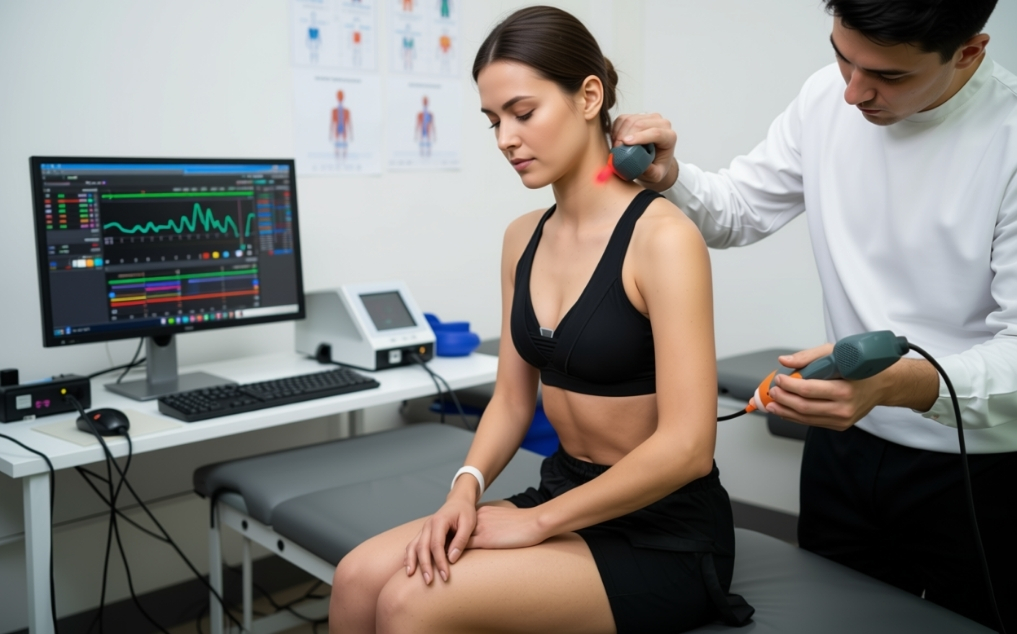

Living with lower back pain in Oswego often means relying on painkillers, injections, or risky surgery—temporary fixes that don’t address the root cause. Conventional approaches treat pain as something to manage, not solve.
Dr. Kelly Lally and her team at StretchClub® in Oswego help patients move beyond symptom relief to true recovery. Using doctor-designed programs with PNF techniques and dynamic partner-assisted stretching, we pinpoint and correct the specific movement dysfunction causing your pain. No quick fixes—just lasting results tailored to your body’s unique patterns.
Understanding Why Your Back Hurts: Beyond Generic Diagnosis
Most people receive vague diagnoses for lower back pain—“muscle strain,” “degenerative disk disease,” or “general lower back pain.” These labels describe symptoms but rarely identify the real cause. Your pain exists for a reason unique to how your body moves, how your muscles are balanced, and how your spine stabilizes during daily activities.

The underlying causes usually fall into predictable patterns. Weak deep core muscles fail to stabilize the spine, forcing surface muscles to overwork and fatigue. Tight hip flexors or glutes limit motion, causing the lower back to compensate. Postural misalignments place constant stress on the spine. Rarely is it a single structural issue; more often, it’s a combination of movement dysfunctions that build up over time.
The Movement Dysfunction Assessment
Identifying your specific cause requires a thorough assessment of how your body actually moves, not just where it hurts. Dr. Lally and his team evaluate your flexibility in multiple directions, test your core strength and activation patterns, assess your spinal alignment, and watch how you move through various ranges of motion. This assessment reveals the exact dysfunction driving your pain—information that generic MRI scans and X-rays can’t provide.
Many people discover that their pain isn’t primarily caused by what they thought. Someone convinced they have disk damage learns their real problem is poor core activation. Another patient, thinking they have hip problems, realizes their glutes are weak and their hip flexors are too tight. Once you understand your actual problem, the solution becomes clear.
Why Standard Pain Management Fails
Pain meds, generic physical therapy, and injections all share a key flaw: they treat symptoms, not the root cause. Anti-inflammatories dull pain, but your body keeps compensating around the dysfunction. Standard therapy protocols work for some, but often miss individual needs. Epidural injections offer temporary relief while the underlying movement patterns continue to cause problems.
The result is a frustrating cycle: you get temporary relief, return to normal activity, re-aggravate the underlying issue, and the pain comes back. You’ve learned to manage pain instead of resolving it. Dr. Lally’s approach breaks this cycle by targeting the root cause—the specific movement dysfunction in your body—rather than just managing symptoms.
The StretchClub Difference: Diagnosis Leads to Treatment
Your personalized lower back pain recovery begins with an accurate diagnosis of your specific dysfunction. Once we understand whether your primary issue is core weakness, hip tightness, postural misalignment, or a combination of factors, we design a targeted program addressing exactly what you need.
This isn’t generic core strengthening or standard stretching routines. Your program might emphasize deep core reactivation using specific cueing techniques, combined with dynamic hip flexor release and glute activation. Or it might focus on postural retraining while addressing thoracic mobility restrictions. The point is that your treatment matches your diagnosis, not a standardized protocol applied to everyone with “lower back pain.”
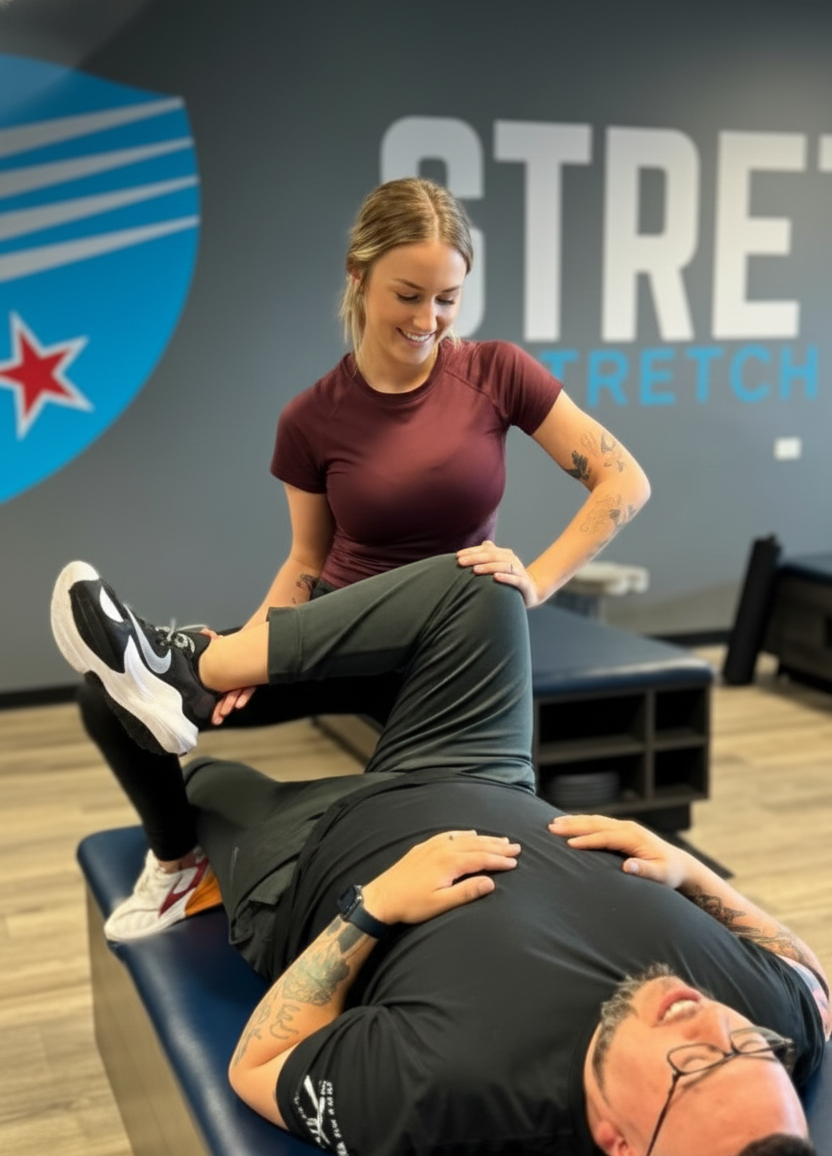
Hands-On Guidance for Proper Activation and Movement
With one-on-one care, Dr. Lally and his team watch every movement. When activating your deep core, we check pelvis stability; during hip mobility work, we ensure the motion comes from the hip—not compensatory spinal movement. Real-time feedback lets us correct patterns immediately, preventing reinforcement of the dysfunction that causes your pain.
Many people spend months doing exercises incorrectly, getting no relief because they’re reinforcing compensation patterns. With hands-on guidance, you learn to move properly, which is the foundation for lasting pain resolution.
Deep Core Motor Control & Cortical Changes: Why Standard Strengthening Fails
Your deep core muscles—particularly your transverse abdominis and multifidus—are designed to stabilize your spine during movement. When these muscles don’t activate properly, larger surface muscles compensate by working constantly to maintain stability. This constant tension leads to muscle fatigue, inflammation, and eventually chronic pain.
Neural plasticity
The problem isn’t just muscular weakness. Research on lumbar multifidus dysfunction shows that in chronic lower back pain, control of the lumbar multifidus is impaired not just at the muscular level, but also at the brain level—in the motor cortex. This is called neural plasticity: people with chronic back pain actually lose normal voluntary control over their stabilizing muscles. Your brain has essentially forgotten how to properly command these muscles to activate.
Additional studies on cortical reorganization confirm that this motor control loss is a central feature of chronic pain, not just a side effect.
Motor Control Retraining Addresses Both Muscle and Brain
Standard strengthening often fails because the motor cortex may not send the right signals to activate your deep stabilizers. Real recovery requires retraining the neural pathway between your brain and muscles.
Dr. Lally’s assessment identifies whether your nervous system can properly activate your stabilizers. Treatment uses precise cueing, hands-on feedback, and guided movement—addressing both muscle function and brain control for lasting results.
Restoring Hip Mobility and Function
Hip dysfunction is one of the most common overlooked causes of lower back pain. Tight hip flexors force your pelvis into an anterior tilt, increasing pressure on your lumbar spine. Weak or underactive glutes fail to control hip movement, forcing your lower back to provide extra stability. Restricted hip internal rotation limits your body’s ability to distribute movement across your kinetic chain.
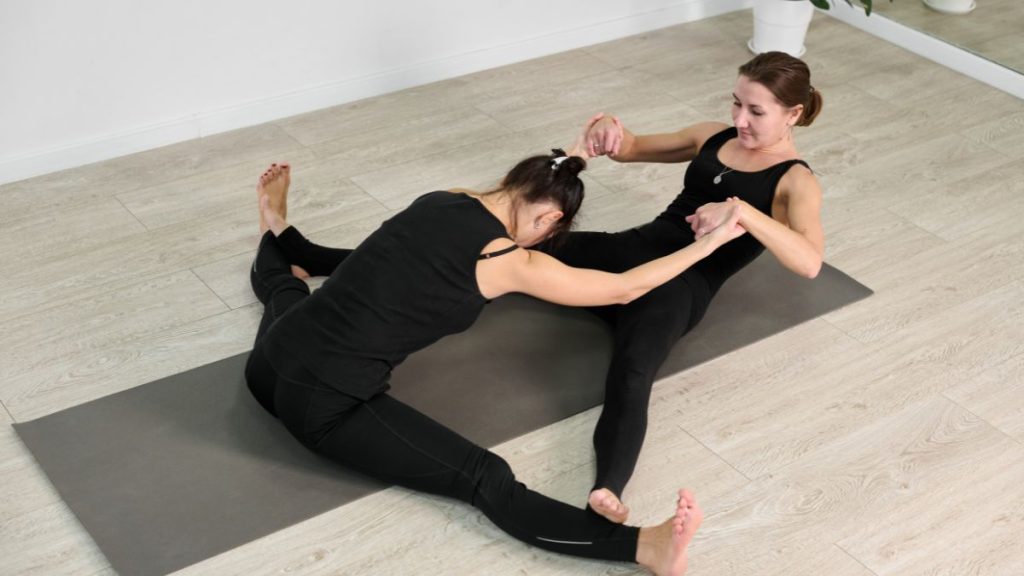
Our assessment identifies specific hip restrictions and weaknesses. We then address them through dynamic partner-assisted stretching to restore mobility and targeted strengthening to activate underperforming muscles. By restoring full hip function, we remove a major stress driver on your lower back, allowing pain to resolve.
Postural Alignment and Daily Movement Retraining
Chronic lower back pain often stems from how you sit, stand, and move daily. Forward-leaning posture, poor lifting mechanics, and even sleeping positions place constant stress on the spine.
Dr. Lally’s team assesses your movement patterns and teaches safer, more efficient positioning. We address workspace ergonomics, proper bending and lifting, and retrain your nervous system to maintain good alignment—reducing the daily stress that fuels chronic pain.
Recovery from Auto Accidents and Workplace Injuries
If your lower back pain started after an accident or workplace injury, the underlying patterns are often similar to other lower back pain cases—muscle guarding, loss of mobility, compensatory movement dysfunction.
Our team has extensive experience with post-accident recovery. We work directly with your insurance to coordinate care so you can focus on healing instead of paperwork.
Ready to Stop Managing Pain and Start Resolving It?
Lower back pain didn’t appear overnight, and quick fixes won’t solve it. Dr. Kelly Lally and his team in Oswego help patients move from chronic pain to pain-free living by addressing the movement dysfunction causing it.
Start with a free consultation: we’ll assess your core, hip mobility, spinal alignment, and movement patterns, explain the cause in plain English, and show how our personalized approach fixes it.
FAQs
How do you determine if my lower back pain is from a disk versus muscle dysfunction?
Disk-related pain typically causes sharp, radiating symptoms into the leg or foot. Muscle-related pain is usually localized to the lower back and feels like tension, fatigue, or stiffness that changes with movement or position. Our assessment can distinguish between the two. Many people assume they have disk damage when it’s actually muscle dysfunction—which responds excellently to targeted treatment.
Why do pain medications only work temporarily for my lower back?
Pain medications block the signals your nerves send to the brain, but don’t correct the underlying cause. Your body keeps compensating for the same dysfunction, so the pain returns once the medication wears off. True, lasting relief comes from fixing the movement dysfunction itself—not just masking the pain.
Can you help if I’ve had lower back pain for years?
Absolutely. Chronic lower back pain often involves deeply ingrained movement patterns and muscle imbalances, but these can be retrained. We’ve helped many Oswego patients resolve pain they’ve lived with for years. The longer you’ve had pain, the more consistent your treatment needs to be, but the outcome is the same: resolution.
What makes your approach different from standard physical therapy clinics?
Standard clinics often use generic protocols applied to all lower back pain patients. We begin with a thorough assessment of your specific dysfunction, then design a completely customized program targeting your exact problem. You also receive hands-on guidance throughout every session, allowing real-time correction of movement patterns that standard clinics miss.
How many sessions do I need before my lower back pain improves?
Many patients notice pain reduction within 2-3 weeks as movement patterns improve and muscle tension decreases. Lasting, stable improvement typically requires 6-10 weeks of consistent treatment. Dr. Lally will give you a realistic timeline after your assessment based on your specific situation.
Is lower back pain from a car accident different to treat than other lower back pain?
The underlying movement dysfunction is often similar, but post-accident pain may involve more acute inflammation and protective muscle guarding. Our team has specific experience with post-accident recovery and works with insurance to coordinate care. We adjust treatment based on your recovery stage and needs.
What should I be doing at home to support my lower back pain recovery?
That depends entirely on your specific assessment and dysfunction. Generic exercises often reinforce the same patterns causing your pain. Dr. Lally teaches you specific movements customized to your needs, which support your treatment and accelerate recovery when done consistently.
Will my lower back pain come back after treatment is complete?
Once we’ve corrected your muscle imbalances, restored your mobility, and retrained your movement patterns, lower back pain often stays resolved. Some patients benefit from occasional maintenance sessions, but many achieve lasting relief. Prevention through proper movement habits and occasional check-ins helps maintain results.