Living with scoliosis means navigating constant awareness that your spine simply doesn’t work the way it should. Clothes hang unevenly across asymmetrical shoulders. Chronic tension builds in your back, sometimes erupting into sharp pain. You’ve learned to adjust how you sit, stand, and move—compensations so automatic you barely notice them until the discomfort becomes impossible to ignore.
You’ve heard the standard medical advice: watch the curve through periodic X-rays, consider bracing if it worsens, contemplate surgery if it becomes severe. But what about the space between monitoring and major intervention? StretchClub® in Naperville IL bridges this gap with specialized scoliosis chiropractic care, addressing what traditional approaches leave untreated. Through the physician-designed FAST system combining chiropractic adjustments, assisted stretch therapy, and physical therapy, patients experience reduced pain and improved function without surgery or bracing.
Understanding Scoliosis Beyond the Curve
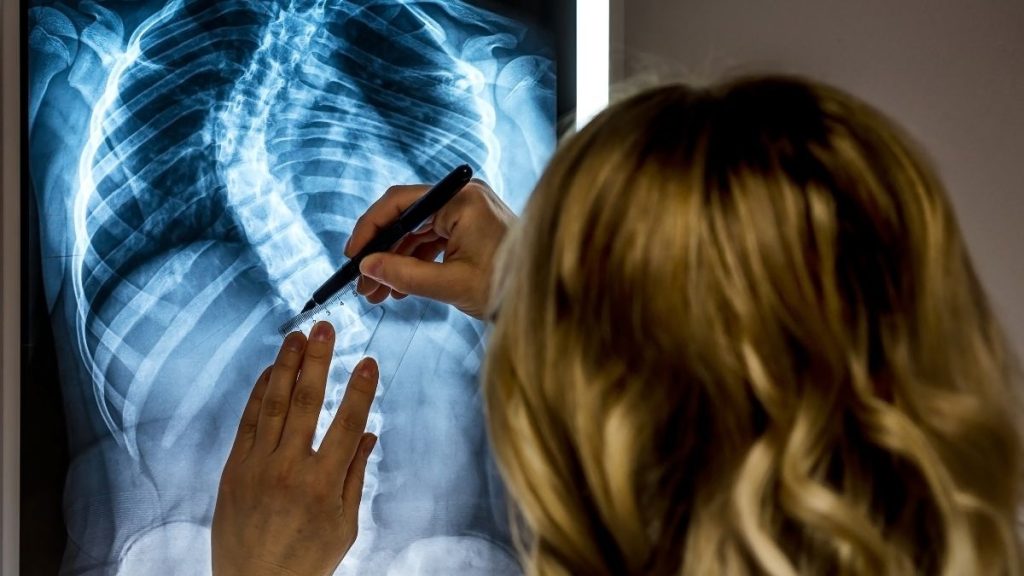
Scoliosis appears as a sideways curve on X-rays—the familiar C or S shape doctors measure in degrees. But this view misses the rotational component, creating most functional problems. Vertebrae don’t just lean sideways—they twist, pulling ribs along and creating the prominent shoulder blade, asymmetrical rib cage, and uneven waist that become more noticeable as curves progress.
Your body responds with remarkable adaptability. Muscles on the concave side shorten and tighten, working overtime to stabilize the compromised spine. Opposing muscles stretch and weaken. Your pelvis tilts to keep your head centered. These compensations preserve function initially but create chronic muscle fatigue and pain, accelerated joint wear, progressive stiffness, and gradual worsening without active intervention.
The Gap Traditional Scoliosis Treatment Leaves
Standard orthopedic management follows watch-and-wait protocols. Curves under 25 degrees get monitored every few months. Curves reaching 25-40 degrees may warrant bracing. Surgery becomes the recommendation when curves exceed 45-50 degrees.
This leaves most scoliosis patients—those with mild to moderate curves causing real symptoms but not meeting intervention thresholds—without active treatment. You’re told your curve isn’t bad enough for bracing or surgery while experiencing chronic pain and movement limitations. Conservative care through StretchClub’s integrated approach addresses this gap by focusing on function, treating the muscular imbalances, spinal restrictions, and movement compensations that significantly affect how you feel daily.
How Chiropractic Care Addresses Scoliosis

Chiropractic care for scoliosis works differently from standard spinal adjustments. Rather than addressing isolated segments, scoliosis treatment considers the entire spinal pattern—how the primary curve creates compensatory curves, where forces concentrate, which segments become hypermobile, and how rotation affects nerve function and rib cage mechanics.
Specialized Techniques for Scoliotic Spines
Dr. Mark Glynn and the StretchClub team utilize techniques designed specifically for scoliotic spines. Treatment focuses on restoring mobility to restricted vertebral segments locked in rotation, reducing nerve irritation, improving muscle firing patterns, and decreasing pain from joints bearing excessive loads. The rotational component receives particular attention since it often creates more functional problems than the lateral curve, compromising nerve pathways, restricting breathing, and creating visible rib prominence and shoulder asymmetry.
Advanced techniques use gentle, sustained pressure rather than aggressive thrusts that carry risks for structurally compromised vertebrae. Treatment works progressively over weeks and months.
The Revolutionary FAST System for Scoliosis
Flexibility: Releasing Chronic Muscle Tightness
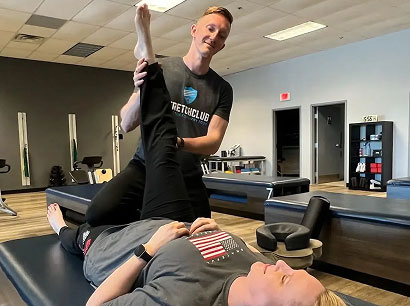
StretchClub’s physician-designed assisted stretch therapy targets predictable patterns of muscle tightness scoliosis creates. The concave side harbors chronically shortened tissues—quadratus lumborum, latissimus dorsi, hip flexors, and intercostal muscles restricting breathing capacity.
Your body’s protective reflexes prevent you from stretching yourself deeply enough to release chronic restrictions. Professional-assisted stretching safely overrides these mechanisms through external leverage and proprioceptive neuromuscular facilitation techniques. Sessions typically occur 2-3 times monthly, with therapists adjusting based on real-time feedback. Patients often notice improved flexibility within weeks.
Alignment: Pattern-Based Chiropractic Adjustments
Chiropractic treatment addresses both the primary curve and compensatory patterns. Gentle, precise adjustments restore proper motion to restricted segments while reducing compensatory misalignments. Treatment coordinates closely with stretch therapy—as tight muscles release their pulling forces, adjustments hold more effectively.
Dr. Glynn’s years of expertise ensure treatment specifically addresses scoliosis rather than applying generic protocols. Frequency typically begins with 2-3 sessions weekly during the initial intensive phase, then transitions to maintenance as improvements stabilize.
Strength: Building Balanced Support
Physical therapy strengthens weakened muscles on the convex side while maintaining flexibility gains. Targeted exercises focus on core stabilizers, providing dynamic support. Strengthening protocols emphasize balance and coordination—training your nervous system to engage muscles in proper sequence, correcting compensatory firing patterns.
Breathing exercises receive particular emphasis since rib cage rotation affects respiratory mechanics. Many scoliosis patients breathe inefficiently without realizing it. Physical therapy addresses these patterns while building strength to maintain new ranges of motion.
Team: Coordinated Care
Your stretch therapist, chiropractor, and physical therapist actively communicate about your case, sharing observations and adjusting treatment plans collaboratively. When one practitioner notices something—increased restriction, movement changes, or new symptoms—the entire team adjusts your care.
Regular consultations review progress using objective measures: posture photographs, range of motion measurements, pain scales, and functional assessments. This integration produces outcomes that single-modality treatments rarely achieve.
Real Changes Patients Experience

Pain Reduction
Pain reduction typically emerges first, often within the initial month. As tight muscles release, compressed joints decompress, and movement becomes more balanced, the constant background ache diminishes. Many patients describe forgetting about their back for hours—remarkable when you’ve spent years constantly aware of discomfort.
Mobility Improvements
Mobility improvements extend beyond pain reduction. Activities that were uncomfortable become manageable without the conscious effort that previously consumed your attention. You sit through work meetings, drive long distances, and participate in recreational activities without constantly modifying everything.
Postural Changes
Postural changes create visible improvements that others notice, even when curve angles change minimally. Shoulders level somewhat, waist asymmetry becomes less pronounced, and the prominent rib hump becomes less noticeable. Beyond appearance, that nagging sense of being twisted diminishes as alignment improves.
Who Benefits from Scoliosis Chiropractic Care
Adolescents diagnosed during school screenings often face years of “wait and watch” if curves measure under 25 degrees. Conservative care at StretchClub provides active intervention addressing muscular and movement factors contributing to progression, giving families something proactive to do during the critical growth period.
Adults managing curves diagnosed in youth but never adequately addressed, or developing de novo curves from degenerative changes, face gradually worsening symptoms without intervention. Conservative care helps adults maintain mobility, control pain, and preserve function, dramatically improving quality of life even when curve angles remain stable.
Post-surgical patients benefit from conservative care addressing remaining mobile segments above and below fusion areas. These segments frequently develop restrictions and pain as they compensate for immobilized sections.
What to Expect at Your First Visit
Your journey begins by claiming the New Patient Special Offer and scheduling your first appointment. You’ll be greeted by caring team members who guide you through an extensive consultation reviewing your health history, when your scoliosis was diagnosed, what treatments you’ve tried, and your goals. The team conducts a full spinal exam assessing posture, movement patterns, muscle balance, and spinal mobility.
Together, you and the team review consultation results so you fully understand what’s at the root cause of your issues. You’ll develop a personalized game plan showing exactly how treatment will address your unique presentation. Most patients begin with 2-3 visits weekly during the initial 8-12 week intensive phase before transitioning to maintenance care.
Start Your Scoliosis Treatment at StretchClub Naperville
StretchClub‘s physician-designed FAST system represents years of clinical experience addressing scoliosis from every angle. Dr. Mark Glynn’s training ensures you receive care specifically tailored to scoliosis using the safest, most effective techniques available. Client testimonials consistently describe dramatic improvements after attending 2-3 times monthly, with headaches eliminated and bodies simply feeling better.
Don’t let scoliosis continue limiting your comfort and function. Contact StretchClub Naperville today to schedule your free consultation. Email info@stretchclub.com or visit stretchclub.com to book online and learn more about their treatments. Experience how the physician-designed FAST system, combining chiropractic adjustments, assisted stretching, and physical therapy, can help you move better and feel better.
Frequently Asked Questions
Can chiropractic care reduce my scoliosis curve?
Modest improvements sometimes occur, but dramatic reductions remain uncommon, particularly in adults. More importantly, treatment addresses functional problems—pain, restricted movement, and progressive degeneration. Many patients find even minimal curve changes produce substantial improvements because treatment optimizes movement quality.
Is chiropractic treatment safe for scoliosis?
Yes, when performed by practitioners trained specifically in scoliosis care. Treatment uses gentle techniques appropriate for rotated, structurally compromised spines. The integrated approach ensures adjustments coordinate with stretching and strengthening, creating balanced improvements.
How does this differ from orthopedic scoliosis care?
Orthopedic management focuses on preventing severe deformity through bracing and correcting it through surgery. Conservative chiropractic care addresses functional problems and symptoms at all curve severities, providing active treatment for patients whose curves don’t warrant bracing or surgery.
Will I need treatment indefinitely?
Initial intensive treatment typically spans 8-12 weeks. Most patients then transition to maintenance care—perhaps 2-3 times monthly—preventing regression and addressing new restrictions. This resembles dental care: initial treatment addresses accumulated problems, ongoing maintenance preserves improvements.
Can this help my child avoid bracing or surgery?
For adolescents with mild to moderate curves, early conservative intervention may prevent progression requiring more aggressive treatment. However, decisions should involve your child’s orthopedic specialist. Conservative care often works well alongside bracing when necessary.
How quickly should I expect results?
Most patients notice reduced discomfort and improved movement within 2-4 weeks. Visible postural changes typically require 8-12 weeks as tissues remodel and new movement patterns solidify. Long-term improvements continue to develop over 6-12 months.
What conditions beyond scoliosis does StretchClub treat?
The integrated FAST system effectively treats lower back pain, neck pain, headaches, sciatica, herniated discs, upper back pain, and injury recovery. The approach has also helped patients with asthma, allergies, migraines, IBS, and carpal tunnel syndrome.
Does insurance cover scoliosis treatment?
Many insurance plans cover chiropractic care and physical therapy components. Coverage for assisted stretch therapy varies. StretchClub’s team verifies your specific benefits and discusses payment options during consultation.